Wars rage across the globe
Black tender weaponized, legalized, expedited
Back into western folds
Pockets lined with silver and gold

And the rain falls

Billionaires wearing t-shirts and jeans
Their assets splitting at the seams
Go to the moon
To float around in zero gravity
With their mugs of civet coffee

And the rain falls

Priests and rabbis and the clergy
Preach from pulpits blood-streaked
With people sacrificed, ostracized, cast aside
As God is their witness, we all see

And the rain falls

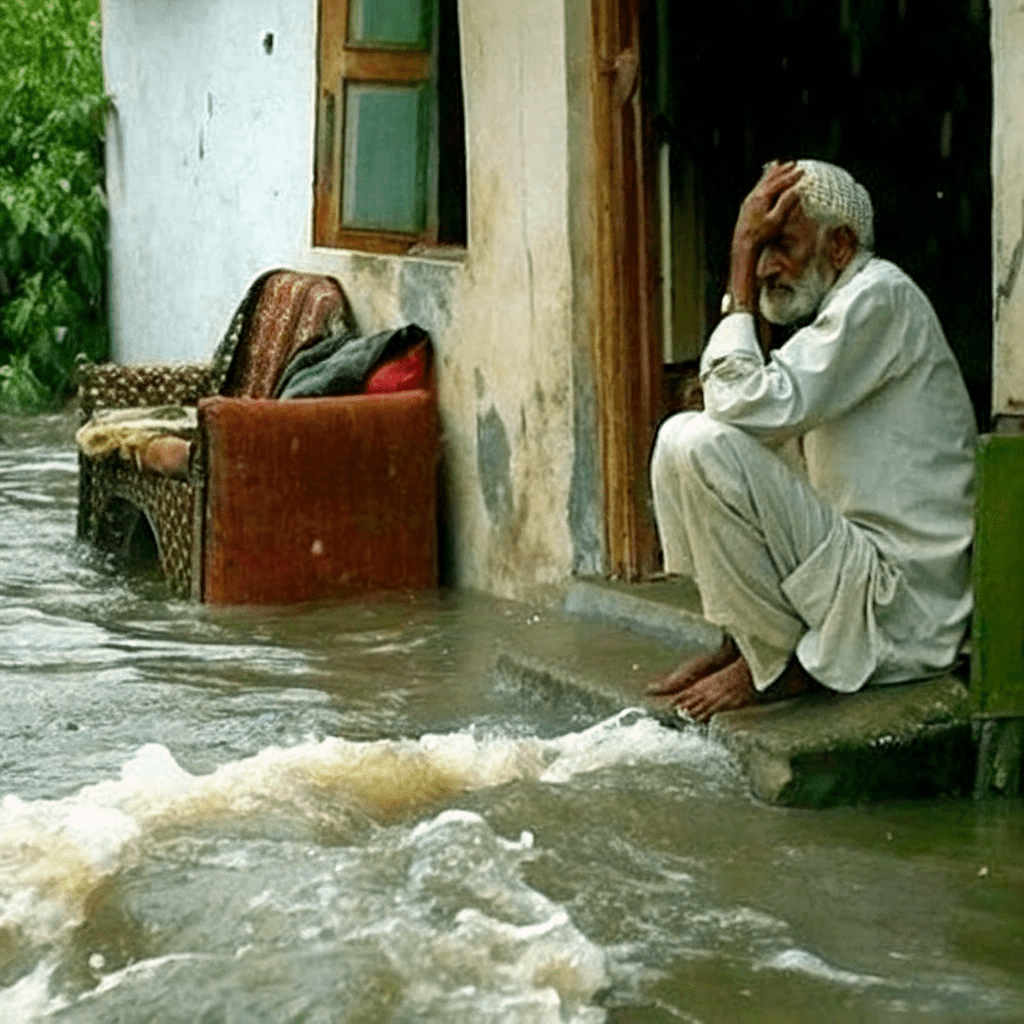
A woman takes in an elder drenched
In torrents that wrenched
The next meal and rent
From his shaking hands
He cries without a sound
His tears surge into the floods
Rolling down
Crimson-hued carrying blood
From the mountains to the sea
As the country drowns.
Blamed again and again for massacres
We have no clue of, our proxy war
Of 40 years ago is still biting us in the bum
‘Fo-Fum - this beast at least
Does not have the bite of the ‘other-man’
With its depraved ideology
Hijacking faith and humanity
Bankrolling them into human bombs
Boom! There goes another one
Creating martyrs of civilians
We protest, we didn’t do it
They say we did, you see
Another ethos, dark and evil has floated in upon the sea
And so they insist it is us
Nurturing terrorists underground and above
Guns blazing, egos inflating
Up up to the constellation
Of ISRO satellites

But what is this?

3, 4, 5, 6 jets down - not ours
We shook them right out of their stars - their 5 out of 5 on Amazon
Now they’re raging like bulls in a ring
We’re meme-ing and gif-ing like comedy kings
I’m laughing at both
A little harder at the misplaced ire
Full of apocalyptic brimstone and fire

But here it is

War is not what any of us need
Good sense, forebearance, lucidity
Is the need of the hour and I want to believe
In this ideology even as I
Pin a little pin of green and white
Crescent moon and star shining bright
Onto my beating heart full of pride

Because when all’s said and done

Between neighbours who live side by side
Sharing a culture old as time
Huddled albeit over our nuclear buttons
War really is just not an option.
US Hegemony, Its Lingering Pakistan/ Afghanistan Embarrassment and now a Taliban Government
It was the early 80s. I still vividly remember as a child, standing on the side of the iconic Mall road in Murree (a mountain resort town situated about 30kms northeast of Islamabad in Punjab, Pakistan, and also home to a number of missionary boarding schools) with compatriots from my school and others, waving little Pakistani and American flags as President Zia ul Haq accompanied by the then US Vice President, George H. W. Bush (Bush Senior) drove by in their endless cavalcade of black luxury sedans. For us it was a joyous day out of the regular rigour of boarding school life; for Pakistan it was the beginning of the end of its Rising Star status in the region.
Pakistan, so geostrategically well situated to catalyse the downfall of the Soviet empire- the one thorn in the side of the Americans and the only obstacle to an all out USA dominated planet- was requested to become Ally Numero Uno. And we complied in the then considered most shrewd and cunning manner – through religiously radicalising, arming and mobilising an entire nation in a war that was to turn in on itself for decades after the USSR fell. By God, did we comply! And for very little in return. A statesman at the helm of affairs at the time (or even a half-way successful businessman like Donald Trump armed as he is with his career collage of bankruptcies), rather than a religiously devout military man like Zia Ul Haq, would have at least got us better trade deals to help shore up the economy once the dust of battle settled. But these are wishful conjectures…and the rest as they say, is history.
Soviet Russia sputtered and fell and the USA couldn’t get out of the region fast enough, leaving two countries with populations in the area of 130 million (circa 1992) to clean up the mess. But radical religion has a way of festering, sometimes out of sight, and emerging multiplied, more virulent, more destructive and deadlier than before. And that has been the dubious Vestige of Alliance bestowed on the two countries, the “rewards” of which we are continuing to grimly reap. Kabul, once considered the Paris of the East, is now a wraith of its former self, and the country has been declared a failed state. Pakistan itself has been teetering on the edge of the abyss of Pariah States. It’s people have undergone decades of global dismissal at best and damnation at worst. Despite being the fifth most populous country in the world and a nuclear power, it has fallen behind all its compatriots on almost every index of progress, prosperity and nationhood. The war on terror in fact, has purportedly cost the Pakistani economy a total of almost USD 130 billion since 2001.
And now in a not entirely shocking but surprising turn of events, Afghanistan has fallen to the Taliban. I’m not even sure anymore as to how appropriate the term “fallen” is in this case. After all, for 40 years, the country was propped up by mostly US military might and the puppet government that it supported. The powers that be, were quite completely ignorant of the real dynamics of the region: the centuries old tribalism, the multicultural factionalism. They were attempting to colour Afghanistan with the same brush that they have done in almost all of their other failed military endeavours of the 20th and 21st centuries. They were trying to homogenise the country; bring it to heel via a myopic vision that they thought was applicable to all the tribes, all the different kinds of people that made up the rich social and cultural fabric of Afghanistan. They failed, utterly and completely.
The below are a few key reasons for this most recent watershed moment in the country:
⁃ The average Afghan, (mean age: 20 years) having lived in a state of mostly active war, has developed an innate distrust of its sham government and its “enablers” (the West). They see the country as having been taken over, “invaded” by the US; and that has never been a sustainable state of affairs for the proud, sovereign Afghan people. And so, after 40 years of occupation, many in the beleaguered country preferred to opt for the dystopic, ultra orthodox approach of the Taliban since it also brought with it freedom from the invading forces. There was thus, a perfect storm created at the centre of which was the formidable desire for self determination.
⁃ The last 20 years have purportedly seen billions of dollars siphoned towards the Afghan cause. But when you have a country with no economy to speak of, no development and no nation building, the aid tends to find its way into the local pockets of the crooked and the powerful. And so it has been with Afghanistan with very little of the aid finding its way to the communities at large. Investing in building trade and industry would have been the optimal way to make real, effective inroads into the lives of the people. But that requires sitting down with the people, understanding them and working with them at grass root levels. That was never the agenda of the US. They wanted things done their way backed by the full force of their military might. Which brings me to the third point.
⁃ The average Afghan also saw that there was massive corruption in the government, among the very people who were supposed to lead them out of their war-driven poverty. Over the past 40 years, a complete and utter trust deficit had grown between the people and their “infidel-supported” puppet government – there was no fifth, sixth or twentieth chance left to give to their leaders; no opportunities for do-overs by their government. And so, the exit of the allied troops also served as the inflection point for their exploitative, demoralised leadership to be overturned. That the Taliban were doing the overturning was inconsequential. At the end of the day, they in all their perverse, radical glory, were still their fellow citizens, their brothers in arms.
And so it was, that on a balmy August day in 2021, Afghanistan was once again a free country. Bizarre as it sounds given who freed the proud Afghan people, that for them, is the inalienable truth.
The million dollar question now is how the brand new Afghan sovereignty will be managed by the Taliban leadership. It is important to note that they as a faction, are also older, wiser and more cognisant of global norms, ethics and diplomacy. They are aware also that they are no longer a rag tag militia group hiding in caves and living on the edge with no clear and sustainable vision or mission. They have been catapulted against all odds (or indeed because of them!) into the role of the leaders of their homeland. They know they’ve outgrown the plundering, riotous band of robbers and murderers that they were. They know they now have the formidable task of the leadership and governance of almost 40 million people. The Taliban are aware that almost overnight they have morphed into statesmen.
The million dollar question beckons again: how are the Taliban going to go about being national leaders who will also be welcome on International platforms? A state that other countries will engage with on trade, diplomacy, military/defense, intelligence and foreign aid? They know they cannot exist as a dystopian island unto themselves; even if they have the inclination, they don’t have the means.
The early glimmerings in the immediate aftermath of the Taliban takeover indicate that it can go either way: their spokesperson is articulate and willing to share their points of view and to be questioned by mainstream international media. So far, the sound bites have been almost liberal by historical Taliban standards.
While I, as a woman, would not want to be a citizen of the newly independent state, I would still pause before summarily dismissing the new regime. We are living in strange times where no nation can lay claim anymore to being more righteous than the rest and presume to lead the natives out of their ignorance (everyone now has public skeletons in their History closets). These are also times where global ethics and policies are constantly being reshaped by the voices of the people of the world as they look for the truth; as they learn to separate the chaff from the grain on the information super highway.
While everything right now points to the country being pulled back into the dark ages, while our knee jerks are all about reclaiming the land back from the Taliban, we need to pause. We need to wait and watch. Like I said, we are living in strange times and while we continue to champion human rights, to raise our voices for the basic freedoms of every citizen everywhere, we still need to be aware that the one size of the western democratic ideal doesn’t fit all.
Closer to home, countries like Pakistan, Russia, China and Iran have a direct stake in this new equation since any militant activity will tend to spillover into these countries either in the form of terrorism or refugees or both as has been the unfortunate case in Pakistan. Now is the critical juncture where all the allies (and the adversaries!) in the region need to come together to make this transition in the Afghan government as seamless as possible, while also ensuring that the small steps made towards modernization and individual emancipation in the country over the last few years, are not completely decimated by the new orthodox Islamist regime.
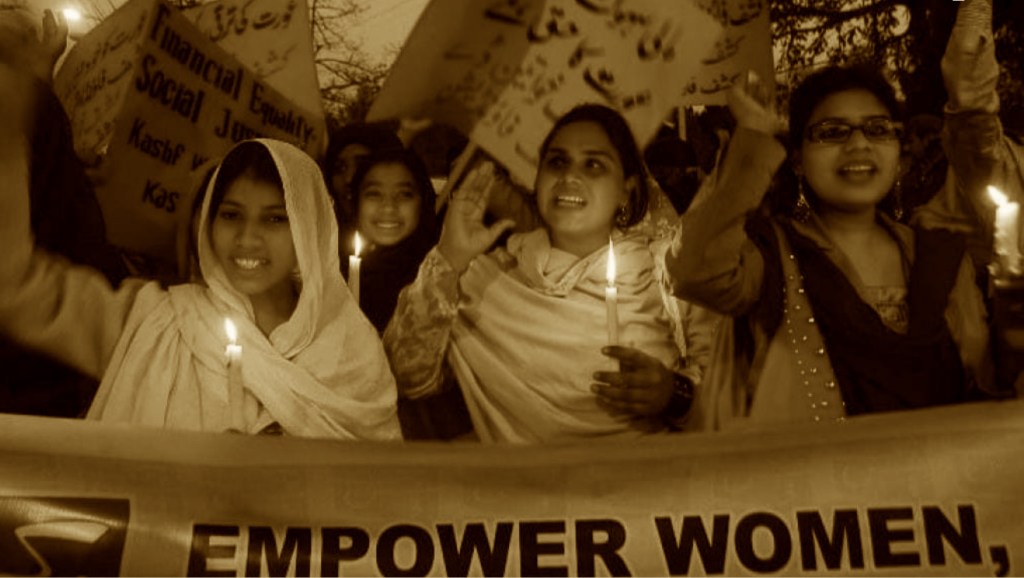
This is a tribute of determination, hope and new beginnings not only for the Pakistani women, but for all the heroic women around the world who are speaking out and standing up for themselves against all manner of cruel and brutal patriarchy. It is also a testimonial and a resounding voice of support for those brave sisters of ours who are living from day to day, facing their detractors with courage and resilience in the hope of a better tomorrow.
I have grown in its shadow; I have felt its hot breath
As it slithers around me; dogging my every step.
I hear it jeer in the brightness of day
On streets and in parks and in quiet cafes.
I see it brazenly growl at my sisters too
As it strides along its pernicious route.
It thunders and lashes and speaks in strange tongues
My head is reeling; there’s no air in my lungs!
From quiet dark murmurs it’s upsurged to discord
The brutal Patriarchy - our master and lord!

I’ve decided I won’t heed its vanquishing rail
I’ve resolved I will fight it tooth and nail.
And so I have become one of the “pariah” few
Who is resoundingly calling for something new.
I make my case; then await the backlash
For sticks and stones; a bruise and a gash.
There are more like myself who are throwing back the knives,
We’re banding together to take back our lives.
One more voice, one more person, one more protest
We’re the Women of _____ ; and we’re up to this test.

From the farthest reaches of our blessed land
We will raise our voices, our spirits, our hands;
Let’s tell them, That’s it! That’s enough! No more!
We won’t be your chattels, your “Islamic honour”.
We won’t hide away so you can roam free
With your hormones and lust; your uncontrollable needs.
We won’t be degraded, threatened and shamed
While you play out your age old tribal games.
We, your wives, your sisters and your daughters
Will be shepherded no more like lambs to the slaughter.

We are the tender, formidable half of our world
We are the guides, the teachers and the nurturers
We birth generations to carry precious legacies
Of peace and love; progress and humanity.
For too long have those reins been usurped by the men
We are taking them back on every continent.
We will be your equals in every way
Step down from those pedestals; come out of your caves.
Hold our hands as your partners as together we walk
We have risen; we are strong; we are the Dome of the Rock*.
* Dome of the Rock: A holy site in Jerusalem which hosts the Al-Aqsa Mosque and the Dome of the Rock, a seventh-century structure believed to be where the Prophet Muhammad ascended to heaven.
Qasim Khan, together with his brother, Zahid Khan lived in their ancestral home in Peshawar. Their children had grown up together, with of course the virtues of restraint and inhibition instilled from the very beginning into every girl child. As providence had it, there were only two girls born in Mishal’s generation – so far that is, given the erratic procreativity that often times flourished in joint family systems, with sometimes mothers and daughters falling simultaneously pregnant. As things were at the time, Qasim Khan and Zahid Khan each, had two sons and a daughter. In their homestead, girls were promised off to eleigible boys and men as closely related to their immediate family, and as early as possible. And so, three years ago, Mishal was betrothed to her cousin, Dawood, the older of Zahid Khan’s two sons.
Mishal’s Nikah* ceremony in all its quiet austerity had taken place when she had just turned thirteen. Even at that tender age, she was aware and sensitive to the implications of being “handed over” to her uncle’s family; of now being Zahid Khan’s wellspring of honour, modesty and one of two future perpetuators of his genomic lineage. She had carried that burden with the eqaniamity borne of nurture and naïveté, until that day when the protective walls of her home had come tumbling down around her: It was six months after her nikah to Dawood while she was back home for the Eid holidays. It was also the scorching peak of summer when the whole household would be cloaked in post-lunch torpor, dead to the world until the cooler evening breezes stirred the stillness. She had gone to the kitchen to look for a snack when he had come upon her. She was still surrounded by the langurous afterglow of her recent siesta when Dawood had jumped on her. He had thrown her to the ground and groped, prodded and choked her with such ferocity that she was left battered and utterly bewildered. He had only let go because he had heard the landline ring and knew that someone was going to rise to answer it.
Mishal lay there on the tiled floor, reeling from what had just happened. Her young mind, unable to recognise the atrocity and the ugliness of the episode in its immediate aftermath, was in a flux of confusion and anger. She got to her feet and fixed her shirt, tentatively touching her arm where a weal was already forming. She felt her bruised throat and catching sight of her reflection in the glass door of the cabinet, saw also a rip in the neckline of her kameez. She stared at the image. The searing heat of embarrassment and shame now beginning to fill her every pore. She felt like she was choking again but this time it was her own guilt and distress that had her in their stranglehold. Barely able to breathe, she picked her dupatta up off the floor and made her way back to the bedroom. Her mother was just waking up. Kulsoom took one look at her daughter, got up and locked the bedroom door. She sat her distraught, sobbing daughter down and managed to extricate the gist of what had happened to her. Kulsoom held her daughter close for a little while; held her one last time at the threshold of her childhood. Then she took her across once and for all, into her own encumbered, wary and confined world, just as Kusloom’s mother had done with her. She had hoped that her only daughter would thrive in the joys of childhood just a little longer; that her spontaneous laughter carried as it was on the tide of light hearted innocence, would ring in the house for a few more years. But she also knew that women’s hopes were like fragile petals, to drop off or be plucked at the will of God or the whims of the men in their lives. What was done was done. She held her daughter by her shoulders and looking straight into her eyes she told her that this episode was to remain unspoken of, forever closed, forgotten.
(II)
Mishal sat in her bedroom that she shared with her mother and her six year old brother. Over the last three years, a lot had changed. She had almost overnight matured into not only a woman but had over the years developed an abhorrence for her husband-to-be and an acute dislike for the other men of the household, including her father. She thought back to the day that Dawood had accosted her … assaulted her. She had been told to forget, to wash her mind clean of the event. Her mother in fact, had never mentioned it again. Ever. Hiding behind the ego and cowardice of patriarchy as its accomplice numero uno! Mishal thought with resentment. She imagined countless scenarios where Dawood would just vanish from her life. Sometimes these daydreams were soothing, calming; at others it was not enough to imagine – she had to reassure herself in a raw, racking, visceral way that she was in charge of her life. So she had acted out, mostly in school; she wouldn’t study if she didn’t want to; she would eat only a teaspoonful for the whole day if she so desired; she wouldn’t wash her hair for a fortnight if the whim overtook her. With time and her insatiable need to feel in control of her life, she had expanded the limits of her rebellion: she had even tried to run away from school. She hadn’t meant to, seriously … but she had to try it. Of course, Mother Gertrude had had one of her long sermon-like talks with her. She did say that she wouldn’t mention the ‘misadventure’ to her father … Mishal had almost wished that her principal had told her father, only so she could see some emotion, any emotion on his cold, stone-like face.
Something else was stirring at the back of Mishal’s thoughts today. She got up and walked over to her wardrobe, reaching into the far depths of its uppermost shelf. That’s where she had stowed it away, her red paisley dupatta. In the days after Dawood had attacked her in the kitchen, she had gone out of her way to avoid any contact with him, mealtimes being the necessary exception. Despite that and because he could, she thought bitterly, he had tormented and agonised her, intimidated and bullied her in all the big and little ways that are meant to break the spirit. One day a few months after the episode, he had again cornered her, but this time, had the good sense not to touch her. Her whole demeanour was that of a she wolf ready to gouge out her assialant’s eyes. He had laughed at her and then incensed by the look of loathing and fear on her face, he had said something chilling to her: that he’d gone after her because of the way she was dressed, provocatively; without her hijab and with only that fancy red paisley dupatta around her. She was asking for it, he’d added. She had growled at him because she had only her raw emotion to show. There was no biting retaliation, no barbs, no words that she could hurl at him. She only felt her wounded spirit bleed again making her snarl, and then sob with relief after he had gone. She remembered how long and hard she had looked at her paisley dupatta: questioningly, accusingly, sadly, confusedly, angrily, tearfully, and finally with defeat. She had put it away and never worn it again. But it had over time in some inexplicable way, become her banner of hope, of freedom, of daring to be more than she was ever permitted to be. And so she took it out every once in a while, looked at the beautiful red and yellow paisley pattern on its coral background, felt its softness and then fortified, she’d put it away. In its corner – resplendent, hidden, secret.
(III)
The news arrived in the household in little driblets, almost like the patriarchal universe was delivering it gently, even faultily, one shattering little fact at a time. They first heard that Zahid Khan and Dawood had been in an accident on their way back from Islamabad. After an hour of frantic calling and finding out, they learnt that they were admitted to a hospital in Hassan Abdal*; but that they were alright. There was a general release of tension at this last bit of news. Mishal’s father had left for Hasan Abdal as soon as he’d confirmed their whereabouts.
It was around 4 O’ clock in the evening when they received the call from Qasim Khan. His brother and his nephew had both died on the spot. He was bringing their bodies back home.
Kulsoom broke this final piece of news first to her daughter and then to her sister in law. The children would find out in their own way soon enough.
Mishal heard the news silently, looking at her mother with clear, calm eyes. She watched her minister to her sister-in-law who had just lost two of the men in her family in one go. She turned away, feeling her own flood of emotions so tumultuous and thick that her head spun and all she could hear was the roar of an endless, open ocean in her ears … the mad, frantic, powerful, unbound, pounding of her own heart. Her breath was almost ragged as she went to her bedroom. She opened her cupboard and retrieved the red paisley dupatta. She then removed the innocuous, white hijab and slowly, gently almost reverently draped the veil about her, lightly covering her head. She sat on her bed and looked out of the window, calm, serene and with the large, steady flame of hope already melting the corrosive, numbing chill around her heart.
* Dupatta: A shawl traditionally worn by women in the Indian subcontinent.
* Nikah: The Nikah ceremony is the Muslim marriage ceremony. In the Islamic tradition, the marriage contract is signed during the Nikah and it is during this event that the bride and groom say, “I do.”
* Hasan Abdal: A city in the Punjab Province of Pakistan, located 40 km northwest of the country's capital city, Islamabad.
We are such a plagued nation, full of dichotomies and hypocrisies. Respectability, patience and civility have forsaken our national psyche a long, long time ago.
And so we blunder and bluster and we barge ahead with nothing to show for our high-handedness but a spiritually depleted image of the crescent moon and star … It is heartbreaking to think this is the best we can be.
The very essence of our religion continues to be hijacked by those that want to keep pulling us into the dark ages. In the midst of all the inane interpretation and bizarre commentaries around the tenets of our religion, we have gone from one abysmal depth to the next. Each “moral incidence” so much more ludicrous than the last, that we have as a nation quite absolutely forgotten real empathy, intelligence and our sense of community. We have forgotten what it means to be a part of a religion that is innately compassionate, tolerant and peaceful. Case in point: our freakish position and regulation around Blasphemy. A colonial construct, it never existed in its current form and fury in the predominantly Muslim ruled subcontinent before the nineteenth century. And then, it was signed into law to ensure that the differences between the 2 major religions were highlighted rather than the similarities which had bound them into a relatively homogenous society before then. That served to keep the two communities divided and separate which suited our occupiers in their machiavellian Game of Thrones.
Since then and more than in any other Muslim country, the Blasphemy Law has become a chip on our collective Pakistani shoulders that we love to invoke when we want to remind ourselves of who’s the boss. What we fail to take into account is that in a country that is 97% Muslim, we are overhwlemingly The Boss. Our religion is not under threat; we are not a minority trying to keep our vulnerable communities safe. We are the ones in control and therefore the ones obligated to show compassion and forebearance. Instead, we have as a society and a State created a monster in the name of religion.
The truth of the matter is that Islam has not laid down any set definition or punishment for Blasphemy. (Remember… Islam started out as a compassionate, progressive and tolerant religion). As such there are as many interpretations of the word and the laws governing it as there are scholars and Muslim countries. And yet, we in Pakistan have ensured that we make the ultimate brutal joke of the concept, punishing only those who are the least capable of defending themselves – the poor and the minorities. Our short history is rife with shamefully copious examples.
There is much to be done on the socio-religious fronts in our besieged country to render our communities more humane and inclusive. There is also ample opportunity to mend our policies where they are the most cruel and unusual; and our Blasphemy Laws are as good a place as any to start.
Teach not through words and angered passion, but by your own peaceful example
And so it was on another quite uneventful day that the PM of our besieged nation finally put in his two bits to exacerbate our social dilemma just a little more. The tenuous progress that we had made, all things considered (the “Aurat” [Women’s] March, the now audible Moderate social segment lobbying for change, the little everyday triumphs of the Pakistani woman) were pushed right out the window with a single damning sentence. With one unthinking response, Imran Khan gave license to 120 million of the nation’s denizens to judge, demean and assault the other 120 million based on nothing more than macho whims and fancies.
Still, I’m sincerely hoping it was a primal knee jerk reaction not entirely thought through (our patriarchy is copiously given to that). The alternative would mean that he’s been well and truly conditioned by the right wing brigade outside of his home; and by the crystal balls of a soothsaying spouse inside.
If I put aside all emotions and outrage (and believe me, that takes some doing in this case) and analyse it for what it is, it still comes across as grossly irresponsible coming from a Head of Government. More so, because so many of us who believe in a better, more progressive, more prosperous Pakistan have consistently jumped to his defense over the past not entirely scintillating 3 years. When his naysayers condemned him; when his detractors demonised him; when other global leaders criticized him, there was a bulwark of us who stood by him, defended him and made excuses for him. After all, he was a newbie in politics and he had the right to make his share of mistakes in matters of governance and international diplomacy.
But this…. this has really been heart breaking. Disappointing. Infuriating. Like the tragic submersion of the last lifeboat on a sinking ship. One would think that for someone who’s been married 3 times, who consistently exercised his right to seek the most optimal mate for himself; one who obviously appreciated a woman who knew her mind, was aware of her rights and who lived by those credos, would be more sensitive to the adversities that the average woman suffers in Pakistan. Whether it is exercising her right to education, to working, to her freedom, to her basic safety, to making every effort to be the fullest and best version of herself. Instead, Imran Khan behaved like the archetypal patriarchal male who’s been caught with his shalwar down and has to somehow deflect the blame elsewhere.
The truth is, there is still no one else out there to honestly attend to the matters of the State. Here the qualifying word is Honesty. In our nation mired as it is in subversive political antics and corruption; where every preceding head of State has somehow managed to defraud, snatch and steal from the ever suffering public, IK was an honest to goodness breath of fresh air. We the women have, through the unceasing trials and tribulations perpetrated by the men in and around our circles of life, learnt a wisdom that has also been our survival tactic: to look at the larger picture, put aside even monumental grudges and march on. That’s what makes us formidable but also vulnerable. So while we march on Mr.PM, we also look to you to do your duty: Apologize publicly to the 120 million women of the country that you’re leading. Not because we would wither away without those words of redress, but because we want to continue to feel relatively safe in the land we call home.
I raise up my voice—not so that I can shout, but so that those without a voice can be heard. … We cannot all succeed when half of us are held back. Malala Yousafzai
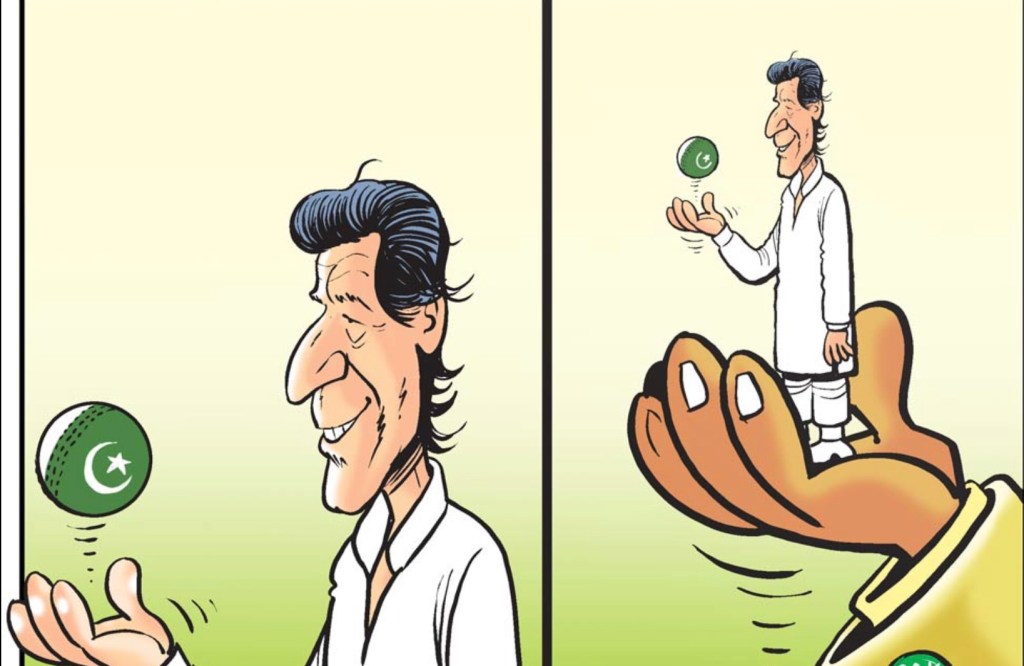
Earlier this year, after decades, the island of Sri Lanka welcomed the Pakistani cricketing legend of yore. Thankfully, the political mantle is still too new to disenchant the international fan base. Not that I think he is a corrupt bag of officious bones in the manner peculiar to many of his South Asian compatriots and indeed, his very own predecessors. No, he’s just a little soft in the head; a natural affliction, I have come to believe, when one decides to not go down the oft trodden path of political corruption and depravity. The cerebral mush of course, leads to an entirely different set of bureaucratic disasters. The long and short of it is that Imran Khan’s heart is in the right place but his brain is an addled brew of eye of newt, and toe of frog, wool of bat and tongue of dog*... And so, even with the best of intentions, the empire double doubles, toils and troubles!* But i digress… and can you blame me! Like everyone else in our beleaguered country, I too am a devoted armchair warrior and am wont to vent.
So why did our PM Imran Khan visit Sri Lanka?
What an interesting question, full of intrigue and the promise of riveting conspiracy theories (rubbing my hands gleefully and wanting to quote more eccentric old world verse!)
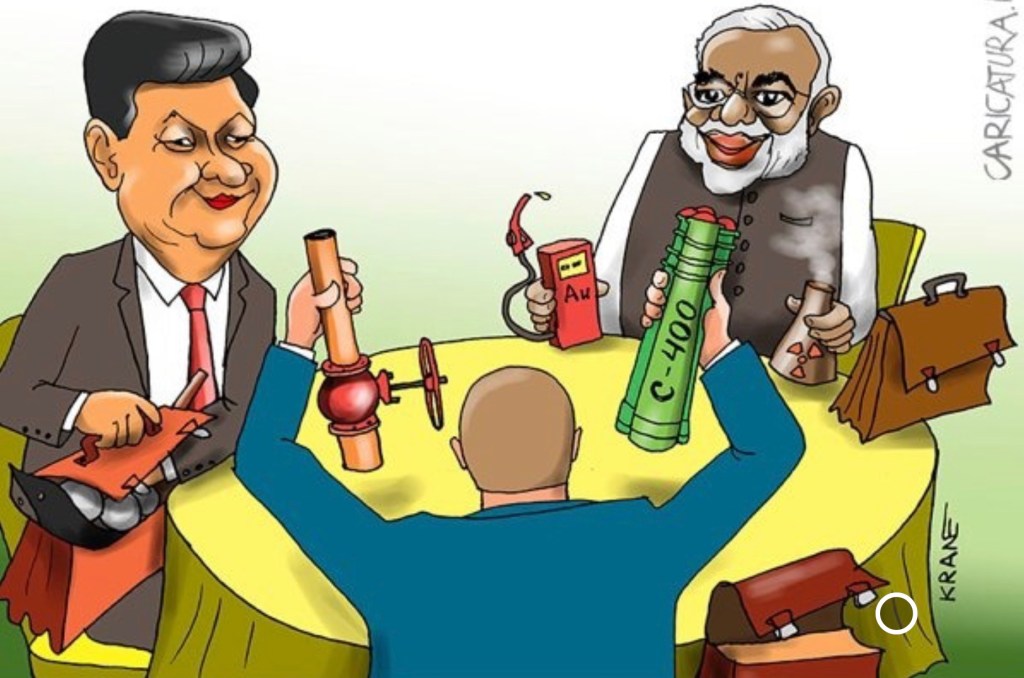
So here’s my take on it. The global power structure is gradually changing, and the South Asian bloc wants to be ready to play its part. Colonially-seeded geographical antagonism is seeming more and more irrelevant and incongruous as our unipolar world dithers on its North American weighted axis. As the US struggles with its burgeoning domestic issues, its inconvenient truths, it seems less and less likely to hold the moral mantle of global leadership. And when that dignity, skin deep though it may be, is shaken, the fall of the rest of the edifice is not far behind. No one wants to be told what to do by someone who can’t keep peace in their own backyard. And so, when some little but worthy nation somewhere tells Uncle Sam to mind his own business, we need to be ready to play our parts in catalysing the new equilibrium. Who those game-changing tRICksters* will be, is anyone’s guess. What is pertinent is that success will depend on there being some semblance of peace and harmony between the mighty neighbours of the Eastern hemisphere. And that peace has to begin ground up; with the smaller warring nations politely brought to heel first, so to speak. And so it was that on a swarthy February day, in the golden arms of the south Asian tear drop island, Pakistan was brought into the loop of the Global Reset. Because having two bickering nuclear armed neighbours in the region is generally not favourable to the efficacy of grand plans. And so, a meeting of the two estranged sisters, India and Pakistan, was arranged.
It is also interesting to note that hot on the heels of the Pak PM’s visit, the citizenry was treated to rather strategic Indo-SL combined military aerobatics, showcasing the battling might of mostly the Indian airforce. A polite but stratospherically overt reiteration that while there is some appetite for absurd but fit-to-current-form alliances, it’s best not to forget who the Saber Holdersare and who the Saber Rattlers are.
All this of course is a funny-feeling-in-the-gut conjecture; the waxing eloquent of conspiracy theories. But these days, when truth has so often been stranger than fiction, the civic mingling of sworn enemies is not such a far fetched ideal. The proof of the gesture will of course be in how the two neighbours deal with each other going forward. (Watch out for startlingly long periods of peace along usually tempestuous/ skirmish-ridden borders).
Wade Davis’ words are a reverberating mantra for our times when he said, “No empire long endures, even if few anticipate their demise. Every kingdom is born to die. The 15th century belonged to the Portuguese, the 16th to Spain, 17th to the Dutch. France dominated the 18th and Britain the 19th. [By the 20th century], the torch had long passed into the hands of America”.
Let’s hope America continues to scratch the surface of its domestic/ social inequities, leaving little power vacuums across the globe. Let’s also hope that the Prodigal Sons of the East (daughters are in scarce order!) rise to the occasion. When the time comes, it will take a concerted effort of going against the grain of everything we know to be our patriotic truths, to seed a new epoch.
In politics, absurdity is not a handicap. – Napoleon Bonaparte
*eye of newt.... verse quoted from Shakespeare’s Macbeth
*tRICksters: the RIC in the word stands for the 3 global powerhouses of Russia, India and China.
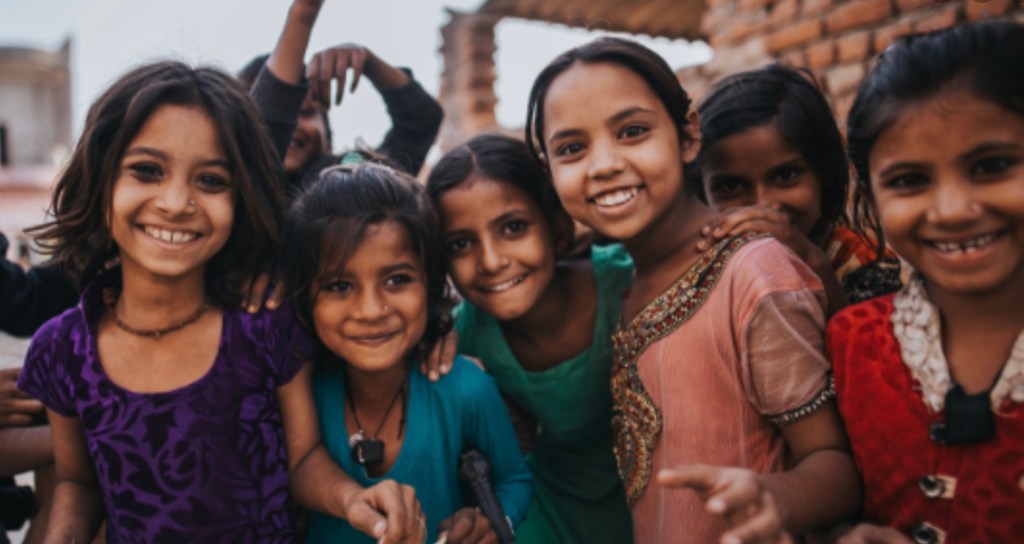
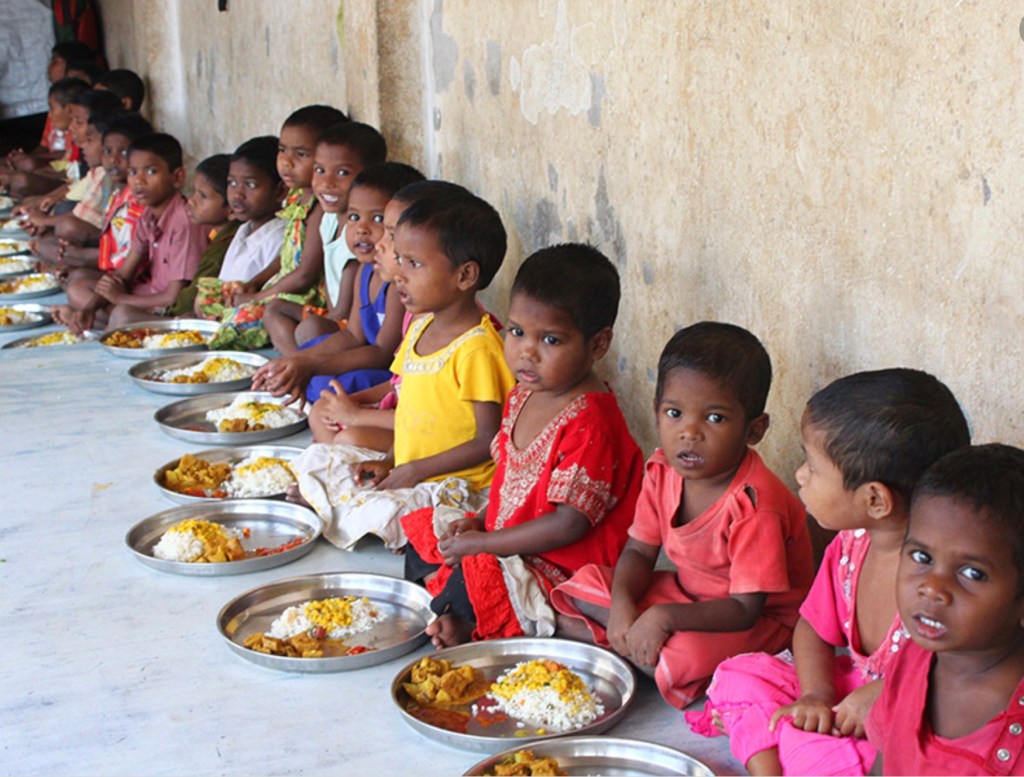
Our Earth, now home to almost 8 billion humans. Also home to 153 million orphan children. Also the nursery to 140 million new births every year. Empirical population statistics when you look at each one individually. But when you connect them via the human equation, one can see the bizarre manifestation of our humanity gone awry.
The need to procreate has been so essential to our culture, beliefs and even our biology, that to build a family unit without passing on our exclusive DNA to our progeny is unthinkable; even unchristian, unislamic. And so, we continue to go from generation to generation, bequeathing with unrelenting tenacity, not so much our values, ethics and a spirit of industry, but the genetic codes that cellularly define us. We proudly bring another nestling into the world, the amalgam of our essential genomic structures, while another child somewhere not far off, adds to the global orphan count. The latter faithfully, effortlessly remains a de-sensitised statistic.
Even organized religion has given in to its baser instincts; and via insidious cloak and dagger plots of familial temptation and intrigue, has summarily discouraged adoption. For how can an adoptive father not be carnally tempted by the fact of the unshared DNA; or an adoptive mother blame herself for her lack of love and care for the child who is in fact, not her child. These are the ugly predispositions that guide our belief systems. And so it has come to pass that some of the most devout nations on earth continue to have the highest birth rates in the world.
I don’t profess to being maternal. The sum total of my maternal instincts extends to my niece and my nephew (they’re as close to being my own children as I’ll have), my team in my corporate past life, the support staff in and around my regular surroundings, and the animal world. (It would appear, there are vestiges of the instinct after all; just not in the customary manner of speaking!) However, I have seen many, many… too many snot-nosed little kids that have become a part of the crazy, conveniently distant tumult on our busy urban streets. And I have heard countless … heartbreakingly countless horror stories of the forgotten children that are manipulated and mauled in the same orphanages and sanctums of faith that avow to protect them. Somehow, somewhere down the line, we have forgotten that we, the human collective, are the nurtures and providers of all the children that we bring into this world.
I am also not a detractor of the traditional family unit. It is, in fact, still one of our conventional social constructs that constantly reminds us that we are innately compassionate, loving and tolerant. However, I am a detractor of every dogma, ideal and manifesto that equates those same human qualities with the sharing of DNA. I am a detractor of all the myths and parables that typecast the concept of adoption in anything but the most judiciously humane light. In our current existences where economic inequality is shamelessly rife, the right of every orphan to be loved and cared for, unassailably surpasses our own need to perpetuate our heredity. The traditional family unit has to evolve into a more conscionable, accepting and diverse whole. The patriarchal ego has to take a back seat as we gradually but steadfastly make the word “Orphan” obsolete.
We no longer have the luxury of compartmentalising the children of our planet into a hierarchy of care, based on genetics. It is high time in fact, that we rallied together like the proverbial village to raise all the children of our world.
“There can be no keener revelation of a society’s soul than the way in which it treats its children.” – Nelson Mandela
*Title inspiration from a 2006 dystopian science fiction movie thriller of the same name.
I’ve been meaning to put this hitherto confusing, emotionally wounding mass of thoughts to paper for a while now. So far, through all the varied attempts over the last 10 years, I’ve always choked on the words in my mind; cocooned in a kind of benumbing Writer’s Block if you will.
So here i am today, feeling a little more intrepid, a tad more emotionally sound and spurred on by a medley of bittersweet reminiscences, to finally reflect on the vital importance of End of Life acceptance, dignity and preparedness.
To die is inevitable; to lead a life well-lived is a choice. And yet, we leave so much to providence while we can still exercise our power to choose, and put up formidable bulwarks of resistance when faced with the inevitable. This is a construct and a bullheaded perpetuation of our modern times, urged on by medical advances and their preserving effect on our life expectancy. While we are living longer, we have also developed an almost combative relationship with the End of Life. Even when everything is pointing towards the inevitable final exit, we choose to fight. We push back, we suffer, we agonize and we degrade, physically, emotionally, mentally and spiritually as we try and keep the “monster” at bay. A lot of times, that militancy is dispensed by the people closest to the terminally ill; and despite their good intentions, end up reducing their already suffering loved ones to little more than vulgarised shadows of their former selves.
In 2008, my mother was diagnosed with stage 4 colon cancer. She lived with the disease for four years with the dignity, grace and courage of the superwoman that she was. Never once did she put on the mantle of the reduced or the afflicted or the invalid. Right to the end, she remained the gracious matriarch of her warm, welcoming home. Towards the end, the final two days to be exact, when she should have been allowed to make that Final Walk with the same beautiful poise with which she had lived her life, we, her family and her medical specialists intervened with all of our might to fight off the inevitable. She was taken to two different hospitals over the span of the last 3 days where the vitally alive battled to avert or at least delay an end, that became heartbreakingly beleaguered.
My final memory of her last day with us, has nothing in the way of any gentleness, love or the deep peace of final goodbyes. It is a memory fraught with fussing, poking, prodding Medical Staff intubating, pulling and pushing her as they, with determined professionalism, executed their Hippocratic oaths. The memory of her looking right at me, confused and exhausted as they inserted the ET tube down her throat is still searingly painful.
For a full two years after that, I thought of that terrible, terrible last scene every single night before i allowed myself to sleep. Perhaps it was my form of emotional self flagellation for being a well meaning party to the inadvertent indignity and torment my mother suffered towards the end.
And then, I’m not sure whether it was a providential helping hand reaching out from my own subconscious to finally pull me out of my emotional abyss, or the tender, cosmic reverberations of the maternal bond that helped me to transition to my current state of mental well being. That said, it was a dream that gave me back some semblance of my peace. So lucid, potent and reassuring was the vision of my mother being well and happy that i woke up with the sheer visceral force of the feeling – the warmth of her touch still lingering on the skin of my hands. (I have written about the dream in another post: https://theroamingdesi.org/2020/03/09/thank-you-for-the-joy/ )
And so, I finally did surface from the viper pit of guilt and grief and i have since, forgiven myself.
All living creatures are the sum total of their experiences and if there’s one thing I’ve learnt from my experience of losing someone close to me is the ability to see death for what it is – unavoidable. While I have lost my fear of the end, i also now understand the profound blessing a quick (relatively painless) exit is. That a departure that is underscored with acceptance, essential conversations, tranquility and quality time spent together becomes the blessed catalyst for more fully celebrating the lives of the loved ones we’ve lost. That the ability to see life and death with more ethereal eyes, to help us to grieve a little less and remember with joy so much more, are the cornerstones of a loving, respectful parting.
These End of Life conversations need to logically start in the hallowed halls of medical science. Medical caregivers need to bring more depth to their oaths taken for preserving the well being of human life, to include the dignity of death. These conversations need to become mainstream; to change the culture of the crusading and contrariness around death. In our current approach, we are left with too little in the way of the love and grace of final farewells.
It will take a consummate change in our emotional and social makeup and temperaments to begin to ennoble death even half as much as we do life. Given the current state of our world, this gracious labour of love around Final Partings may be the panacea for reminding us of both, the wonderful alchemy of the state of being alive and the eternal fragility of life itself.
This is A sequel to my earlier verse “Ravaged”.
This piece looks at the complicated nuances of nurture and upbringing, as opposed to the static all-out denunciation of the individual perpetrating familial rape. This piece of writing attempts to highlight the grotesque patriarachy which we have allowed to perpetuate and which has damaged generations of both, our girls and our boys, in its terrible wake.
I am Harris Jan Saleem, the son of Owais Jan Saleem
I am the scion of the Saleem ___ family
I have been raised like all the men in my family:
To hold my dreams high and my head higher
I have been taught that nothing bends that proud bearing. Nothing.

I was 8 when I first saw my father. In Asma apa’s room.
Asma apa is my cousin; my father’s sister’s daughter.
She is 4 years older than me.
I saw him many times; he saw me see him many times.
I learnt tacitly like so much is at home. Nothing needs to be said for it to be understood and emulated.
“It” was a dutiful visit to Asma apa

I was 20 when i too knew that I had to pay a dutiful visit to a woman of the family
She was a feisty one; too independent-minded for her own good. Her mother said so.
I was going to teach her.
I was going to teach her to be Good. To ensure no harm came to our family honour if she got out of hand.
She was 11; she was old enough.

I first visited Sophia on a rainy monsoon afternoon.
The family was surrounded by a haze of food-satiated, heat-fomented stupor;
Each in their own space in the sprawling ancestral home.
That I knew was the congruous ground for the undertaking of such obligations
She was a handful. I almost came away without fulfilling the onus on me of safeguarding the family honour.
But I persisted - it took a chokehold (and I don’t generally believe in inflicting violence on women).
She ceded.
I learnt that the chokehold was a necessary evil. Every time.
(I also realized with time that it wasn’t really violence since I was doing my duty towards upholding the family honour).
There are a slew of such behavioural nuances no one tells you about; which you have to learn on your own.
All of which you perform for upholding the family honour.

One day my father saw me visiting Sophia
Like i had seen him for so many years, visiting Asma apa.
This time he looked at me - with a wisdom of the ages.
And i knew then that we are the MEN of the family.
We are expected to know; to be versed in the DNA prescription passed down in virtuous silence along the patriarchal line.
I felt i had been let into an ancient, sacred secret.
I felt an inexplicable pride in being a Man of the Saleem Jan family

It’s my wedding day today; I’m to wed Sophia
When I was asked if I would marry her, I had said yes.
Although she was ... tainted.
But I was a male scion of the family; a custodian of my family honour.
I was expected to bear that burden of protecting, of upholding the family name.

But I have been deprived of the consummaiton of my marriage.

Today her sister is coming to stay with us,
For the summer.
She is 10 and I think already very much like my wife, in her waywardness ...
Tomorrow I will do my duty to protect my family name
In whatever way i need to -
Tomorrow, and for as long as i live.








 Mahvash Mohtadullah