We have all, at some time or another been overwhelmed, overpowered, bested by our grief, anxiety and wretchedness. At those times, some of us have also been lucky enough to have that one place where we have, for a while, found some degree of quietude and peace. This is a tribute to those secret little places and spaces of comfort and healing in our lives.
There is this wooden bench I like It’s not fancy, quite the common type Cloaked in by the dappled canopy Of a gracefully pirouetting Mara tree It sits in the park like a dear old friend Its well-worn embrace ever welcoming A young couple walks up, caught in the grips of wrath Love is lost, it’s the wretched aftermath Words are exchanged until the fury’s spent Frustration - Anxiety - Sadness - Silence Then they sit downon the wooden bench … Slowly muscles relax and nerves untense Even if it is a passing interlude Loads are lightened, hearts are soothed.
Wild flowers grow lushly around its feet Bobbing bright heads to earth’s vital beat The bench sits there like a quiet friend It’s well-worn seat ever welcoming A man sits down in a state of unease Holding on to his hat in an errant breeze He picks up his phone and looks at the screen The unlit glass reflects the tranquil scene … He looks up and around him his brow somewhat eased Fleeting albeit, he’s found his moment of peace.
Songful birds and their terrestrial friends Roam warbling and chittering around the bench Hoping for a serendipitously fallen treat They browse busily around the seat A wheelchair-bound man looks up at an overcast sky His female companion already has water in her eyes They sit side by side in worlds of their own Reminiscence weighs heavy of days that are gone A mynah trills as a light drizzle falls And a sweet petrichor briefly dispels the pall … The man looks at her, takes her hand and she smiles For now they’re alright, tomorrow is still a while.
I too have sat in nature’s restoring arms On that bench where she weaves her alchemical charms I too have unburdened my hopes and my fears I too have laid my bursting heart bare And I have heard her soothing murmurs That have quietened my deepest despair I’ve looked into her soft eyes from that corner in the park For a time, my soul too has emerged from the dark … The clouds have parted, the sun has shone through And I’ve breathed more easily, sitting on that wooden pew.
Two weeks after Dharshini’s fall on the dance floor, the pain was gone along with any memory of it and all the wise resolutions made around preserving and safeguarding fragile body parts. Tuesday evening’s dance class was full of kinetic energy and impressive manoeuvres. Everyone had now been in the class for at least a month and even the most ungainly ones were showing glimmerings of talent; the improvements motivated by instructor infatuation and cheerful sociability were vast and pervasive. Dharshini had missed a fortnight of classes but she made up for lost time with her innate sense of rhythm, a natural vigor and the impetus of new love in her heart. So she danced and pranced and leaped around with wild abandon, taking many of her contemporaries by surprise; so much so that a number of times, the floor was left entirely to the explosive gymnastics of Dharshini and her gratified partner of the moment.
After class, while she was still wrapped in the warm glow of her recent exercise, Daniel approached her. He was happily surprised at her performance, he said. She was gifted. Dharshini smiled coyly and looked at him from deep, chocolate brown eyes surrounded by their fringe of thick lashes. Her undeniably superlative feature, her eyes were less windows to her soul and more her covert Weapon of Rapture. She blinked them, looking down and then up and then to one side, interspersing her optical guiles with little smiles and other enchanting expressions that left the object of her visual assault weak in the knees and short of breath. Daniel too capitulated under that focused bewitchery.
They went out to lunch twice and then finally to dinner. Dharshini had early on analysed the situation in minute detail and had decided that she would take this fabulous chance at romance. She had protected her tender heart for just such a once… twice … in a lifetime occasion. So for her, these meals and meet-ups were the steady, respectable progression to an ever lasting union. She was already feeling like a new woman; her old marriage now increasingly morphing into a burden that was best laid to rest at the earliest. She had thought about that aspect too. She would go about it civilly. There was no love lost in that equation as things stood right now; they were both in it because it was convenient and because they were partners in a shared business. She’d break off the marital ties but keep the business partnership going. She was shrewd enough to realize that while she would couple up with the new love of her life, it would be wise to remain the mistress of her own fortunes and the bills that came with it. Her husband was a practical man and wasn’t given to the egoistic bouts of anger and retribution that came so naturally to so many men concerning their women and their finances. After all, they’d been physically estranged for the last ten years and separated for the last eight. He would understand. She had invited Daniel over for dinner to her house the following evening. She had also asked her husband to come earlier that day to have a chat. She hadn’t explained any specifics; just that she wanted to run something by him. Both men had accepted their respective invitations.
Daniel was on the rebound. He had realized that when he began to respond to the advances of his most vivacious student – 57 year old Dharshini. The age difference notwithstanding, there was an almost predictable old-world doggedness with which this romance was progressing. He enjoyed her company immensely and felt the physical pull of her loveliness, but he was also acutely aware of his prevalent state of mind: He was loathe to commit to anything traditional or long term at the current time. He was footloose after years of being shackled in a loveless marriage and knew that he wanted to remain fancy free for a while. She was a good sort; a convent bred girl of conventional values. She was definitely not the sort you conscripted for your rebound shenanigans. And now she’d invited him over to her house – the ultimate gesture of commitment to a promising potential mate. Daniel sighed resignedly. He had to back off.
The next day, Dharshini got the text message an hour before her husband was due to arrive. It was simple and to the point. Daniel couldn’t make it for dinner; he was tied up somewhere. Also, he wanted to assure her that he was committed to their friendship but nothing more. He was sure that she already knew this but as a rule he liked to keep things above board and crystal clear for the benefit of all concerned. He hoped she had a good evening and that he looked forward to seeing her at the next dance class.
She looked at her phone for a long while, the screen darkening and then lighting up when she pressed on it, the words misting over and then reappearing alternately. At first she felt only numb; then injured and somewhat misled and betrayed. There was no anger however; just a strange sense of dejavu. Like she’d seen this pattern before; knew it from somewhere. In a disconnected, detached way, she’d visualized it play out numerous times before as she’d walked away from each one of her ardent entourage of devotees; only this time, she was at the receiving end. She blinked in disbelief and amazement and even managed to smile ruefully in a momentary pang of realisation and mortification.
She finally put the phone away and looked at her watch. Her husband would be here any minute now. They’d have some coffee and she would ask him if he was selling his grey Toyota Aqua. He had spoken of putting it on the market and it was time that she acquired a new carriage for herself.
Dharshini got into her red Honda Fit, wincing in pain. The visit to the orthopaedic specialist had become essential after a week of agony; her whole right leg throbbed like the devil! She knew she had weak knees, troublesome joints and yet, she’d whirled about that room like her behind was on fire! God! Hormones … or was it the lack of them … she thought wearily, the thrill and the motivation of that performance both now squatting in her head like large stupid birds, staring blandly at her. She grimaced as she gently pressed the accelerator, and drove into the Galle Road traffic.
Dharshini, known fondly and unfondly as Dharshi by her various circles of friends and frenemies was 57, bold and beautiful. The perfection marred, just as all sublime things tend to be, in this case, with osteoarthritic joints. Still, she carried herself with the easy confidence borne of almost always standing out in a room full of people. The occasions where she was upstaged, were few and summarily forgotten under dutiful bouts of social amnesia; both, by her and her coterie of cohorts. She was hands down, the alpha of her group, a fact that nobody could deny or indeed, had the temerity to.
A month or so ago, Dharshini had signed up for social dancing classes. She’d heard rumblings of this venue of perspiration and contortions being the place to meet “Good” people. “Eligible” was of course not what she was looking for; after all she was a married woman. Not entirely happily, and not quite cohabiting with her somewhat estranged spouse, but still to all intents and purposes, secured in sacred wedlock. That fact had been conveniently relevant thus far in keeping at bay, the droves of ill suited middle aged and senior hopefuls who constantly vied for her hand and her heart. She had developed a rejection strategy all her own: with every new admirer, although she knew from the outset how it would end, she would only gently, gradually pass on that knowledge to him; after exacting a few lunches, a trip or two for herself and her girl friends and maybe even a bauble or two, in at least silver. It was a sweet, harmless enterprise she always thought coyly, where both parties benefited. She was not one given to dwelling on the aftermath of a broken heart; her moral due diligence ended with her making it resoundingly clear at some point, that she was only ever a friend. And that even if there was some misunderstanding that she hoped that her most recently crushed courter had enjoyed their camaraderie and that they’d continue to be genial with each other. She’d bestow her most beatific smile and come away contented and cheerful, warm in the glow of a problem solved and her moral compass pointing truly heavenwards.
It was on the Dance floor – that battlefield of laborious leg work and fitful grace, that she’d met Danny. A 45 year old divorcee, Daniel had recently moved back to Sri Lanka after a 10 year stint at marriage and business in Brisbane, Australia. Both had come crashing around him about a year ago. He’d decided then that home was where the heart really was and had, bag, baggage and a dog, returned to his hometown of Colombo. He had always loved dancing and was quite consummately professional at executing the lusty, physical moves of the salsa, bachata and the waltz. In an effort to forget the last decade, he plunged into everything that had defined him before he moved abroad and that ironically, went against many of his predilections now. And so, one of the first things he’d done was to sign up as an instructor at his old social dancing school. A decade ago, he’d been one of their more popular teachers with an avid throng of female admirers who were obliged by their fluttering hearts to sign up as students too. It was a lucrative scheme for dashing Danny and a two hour theatre of titillation and thrills for the dancing brigade. Danny had in fact, met his ex-wife at that very school. She had no talent for the Waltz but had sure-footedly danced her way into his heart. That was really the only time they had ever danced for the sheer pleasure of it. After matrimony settled them into its no-nonsense folds, she realized that she quite despised the art form and he realized with some alarm and then resignation that that fact was the least of his marital woes.
Like the other women, Dharshini too had found herself responding to the agile charms of her dance instructor. He had, on more than a few occasions, taken her as his partner to demonstrate to the rest of the class, a particularly complex move full of wild, rousing acrobatics. She came away from these twists and spins breathless and reddened with exertion and excitement. She was sure he too felt his heart strings being jiggled and jostled in all that animated physicality and closeness. He was different though. He wasn’t smiling too readily at her; or babbling; or otherwise showing any signs of being under the influence of her enchantment and allure. Traditionally she was the pursued and the besotted men did all the labour-intensive pursuing. He was congenial but just distant enough to show that he was in control of the situation and if this … this thing… had to go anywhere, it was for her to make the first move. This realisation was both heady and new. She had smiled to herself. There was something else that was new here too: her heart after ages, was beating for someone else!
And so Dharshini had thrown herself into her Salsa and Bacahata lessons, three times a week. A fortnight into the enterprise, she had slipped and fallen on the tiled floor, landing directly on her knees. In the heat of the moment and in the insular glow that now surrounded her at every class, she didn’t feel the pain nor the ominous creaking of her joints every time she bent her knees or leaped deer-like out of her partner’s arms onto the hard floor. She went to bed in a haze of contentment and love. She even felt a random gentle wave of affection rise for all her other unfortunate suitors who had gone their own way. I hope they’re all happy just as I am, she’d thought charitably, big-heartedly. And with that she drifted off into a dreamless, restful sleep.
‘Why was I jumping like a monkey on steroids? Why? Why?’ Dharshini complained bitterly to Sabeena on the phone the next morning. Her mid morning phone chats with one or another of her friends marked the start of every day. She always came away feeling invigorated, light of load and rearing to get on with the rest of her day. Sabeena too came away from the phone call, her inner calm now quite shattered by the torturous raving and ranting of her bossy but well-meaning friend.
The morning after her fall, Dharshini hadn’t been able to bend her right knee at all, and had thought it was best if she stayed in bed. These restful, placatory measures had often worked when her joints occasionally rebelled in the tropical rains and humidity. This was the first time, however, that she’d subjected them to such pounding, ceaseless torture. For two whole weeks! They were obviously going to act like petulant, griping grande dames. For Dharshini, her ankles and her knees were like a twinsome of spinsterly companions that had set up permanent residence on her person. While everything else felt youthful and sprightly, these joints never matched up. They creaked and complained at the slightest intrusion of weather or activity and it took large doses of rest and relaxation to get their grumbling soreness to settle.
The pain had not subsided even after a week of missing classes and tending to her knees. She had finally decided to see her orthopaedic specialist. The doctor and she shared a love-hate relationship on behalf of her joints which he quite practically considered his wards too. He knew that Dharshini only ever came to him when things had gone from bad to worse and when he’d have to resort to strongly advising, cajoling and then threatening, to have her be more compliant. She knew that the good doctor meant well but he was always so grim and pessimistic; always making her feel old and doddery.
‘Mrs. Gunaratne, have you been trying to run relays lately?’ he asked feeling her swollen right knee. She grimaced and mumbled something unintelligible. The universe and he both knew what she meant.
‘You have weak joints Mrs. G. There is hardly any cartilage left in your right knee and the gel* injections are soon going to be insufficient to keep it going. It’s knee replacement surgery for you if this goes on’, he said darkly but also with some satisfaction. He was really quite at his wits end with patients like Mrs. Gunaratne who refused to take supplements, had congenital osteoarthritis and were always up to some joint-jarring misadventure.
‘Doctor Herath, please just give me the injection and I promise to take the pills. I have to go soon. I have another appointment’, Dharshini said somewhat testily. But not too aggressively. He was after all the best orthopaedic surgeon in town. And when it was absolutely necessary, he would be the one to endow her with a set of new knees. She always balked at the idea of surgery and not even the prospect of agreeable, maiden knees could dispel her horror of the surgeon’s scalpel.
* Gel injections: One of the more effective treatments for arthritis is gel knee shots — also referred to as viscosupplementation or hyaluronic acid injections.
The morning glow touched its face
The brick-faced house in the street
It stretched out in the morning rays
Hide’n’seek with some it played
Its favourite morning treat

In the bedroom facing the east
I lay in sleep’s placid arms
The sun wore its morning beam
As it shone into my dawn time dreams
Oblivious of my late alarm

The house shook out its paint and bricks
Its nooks and crannies too
The mynah was already collecting twigs
To fix its nest, repair the rips
From last night’s stormy brew

The day wore on, the house filled up
With daytime smells and sounds
It shook and shimmered, belched and laughed
As it held us all in its matronly arms
Safe in its blessed compound

Evening came and with it the skies
Turned a beautiful rosy pink
T-41 too flushed with delight
Its terracotta facade catching the light
As it watched the twilight sink

The resident crickets began to perform
Their night time symphony
The house sighed softly gathering its form
It seemed like tonight would bring another storm
But inside its walls was warmth and sleep.
Angela had planned their final exit from Mall Square with dignified efficiency, helped as she would be with the gracious support of her long time friends. But sometimes, the best laid plans can get washed down rutted roads that one has not seen nor ever imagined. And so it was that one after another, her carefully constructed relocation schemes crumbled shapelessly in the mire of undisguised faces and unfeigned intentions that had suddenly, unexpectedly surfaced. The sisterhood of Faith had gone careening down the hill, crashing into the emptiness below.
Of the four friends she had appealed to for help, only one had come through – partially. Rashmi’s guest house was occupied by a foreign friend of her daughter’s (that was a bald faced lie!); Sandali had three warehouses in Nugegoda but they were all also suddenly occupied with overflowing inventory (just last week that factory cupboard was bare!); Sarah had no help at home and her sister in law was laid up with a chronic condition (that hale and hearty woman who had never been sick a day in the last 15 years that she’d known her!); and Thilini had offered to have Dilshan and Angela over for a fortnight. After that they were going to finally begin the renovation on their house which they had been postponing for the last five years and which the Covid lockdown had somehow given the much needed impetus for.
It had been a week of revelations, teetering friendships, somber musings and a clarity about her world that had momentarily blinded her. Despite it all, she had taken each disclaimer, coated as it was in pots of sacchrinous sweetness, with calmness and poise.
She had just come back from the hospital where they had moved Dilshan from Intensive Care to a General Ward. It would be another few days before he would be able to come home. “Home” … the word now agitated her; made her nervous, clutching at her throat and stinging her eyes. She was not generally given to sentimentality or self pity and had gone through much in life, stoic and dry-eyed. But this was not like any other curve ball that the universe had thrown at her in the past. This was her entire world toppling down around her. Her sacred world made up of special hand picked individuals who shared the same ethos and the same moral high ground. It was like the ultimately twisted confession where the priest was found to be the greatest sinner. All those sophisticated, benevolent people – her friends – showing up, personifying everything that they had hated about the rest. It was a heartbreaking reality check and it took a lot of Angela’s self possession and control to not just sit down and cry.
Even if she was made of sterner stuff that allowed her to push the pieces of her recently fragmented world into some steely hollow of her mind, she still had the vacating of the premises to deal with.
On a whim, she spoke to the long time security guard of the condomninium. Did he by chance know of any apartment that was available for rent above the 8th floor? Mr. Surdheen did in fact: it was one of Bilal Rahuman’s apartments on the 10th floor. Angela frowned and then swallowed hard – controlling both, her anxiety at the mention of the Muslim name, as well as the long nurtured prejudices that now automatically sprang along with the nomenclature. When Angela didn’t say anything, Surdheen volunteered to speak to the apartment owner – if she wished. He had known the lady long enough to have gauged her jaundiced eye towards everyone really, except Mr. Augustine who managed the mini mart on the premises; he was Catholic. Surdheen himself was Muslim but like so many in his melting pot of a homeland, he lived peacably enough with his Buddhist, Hindu and Christian countrymen. This lady was different. The Mall Square staff had occasionally discussed Angela’s undisguised faith biases and had decided in their combined goodwill that she must have had a bad experience sometime in life to have made her like this.
These days, in the wake of all the recent events, Angela had seemed less and less devoted to her preferences of faith and community; and while she would not normally single out Surdheen to speak to of anything really, she had instinctively gone to him. She knew that he had been at the apartment complex the longest and usually had the most reliable information on tenants, landlords and even the shenanigans of the real estate agents. Usually she would tap into Surdheen’s fount of information via Augustine or one of the other Mall Square staff.
She accepted his offer, thanked him and went back inside. Bilal Rahuman … the name was vaguely familiar, flitting around the edges of her memory. No, she couldn’t recall where she might have heard it. Maybe it was just another Muslim name that she’d heard and while earlier she would have caught it through one ear and ushered it roundly out the other, sometimes these names did tend to stick. This must be one of those sticky Muslim names. That evening Surdheen came to her apartment to give her Bilal Rahuman’s number. She could call him whenever she liked, Mr. Rahuman had informed Surdheen.
Angela had a restless night. Random thoughts that had before evoked simple irritation or plain out ire, now went plodding through her mind like a herd of unhurried elephants – each large, clear and washed clean of the dust that had blurred its tremendous form: She recalled the unremitting distaste with which she’d always regarded bearded men in their “wahabi maxis” as she and her group had called them … thawbs* was the term wasn’t it …..; and the Muslim call to prayer that had always grated on her ears – she had even railed about its primitive, cacophonous quality in the condominium WhatsApp group; and Surdheen and the other two Muslim security guards at Mall Square that she somehow always managed to omit when she was giving the annual gratuity to the rest of the staff. And now she was going to call on one of them and ask for help because there was no one else to turn to. She cringed inwardly, not because of any vestigial aversion as she usually did, but because of a distinct throb of conscience. For the first time, she felt guilty. And wretched. And tired. At some point amid this moral onslaught of her senses, Angela finally fell asleep.
She woke up late the next morning, but feeling rested; surer of herself and what she had to do next. There were no more expectations left to crash and burn and therefore no more emotional turmoil to deal with. She’d experienced it in all its duplicitous ferocity with her inner circle and was already on the other side of it.
She sat up in the chair, fortifying herself with her purposeful stance, picked up the phone and dialled Bilal Rahuman’s number.
He answered on the third ring and greeted her cordially after she had introduced herself.
“How is Dilshan aiya* feeling? Surdheen was telling me he had got the virus”. Angela murmured something about her husband having thankfully turned the corner.
“He is a good man. My duas* for his speedy recovery. I remember meeting him seven years ago when he came to look at my 10th floor apartment at Mall Square. It wasnt quite the right choice for you folks at that time from what I understood. I haven’t changed very much in it but if it suits your requirements now, you’re welcome to rent it”
It so happened that Angela and Dilshan had liked Bilal Rahuman’s apartment seven years ago too; but the owner’s persuasions of faith had not sat well with Angela then. And so they’d gone for their second choice – the more appropriately denominated Mrs. D’Souza’s flat on the 9th floor.
By the fifth day of her telephone conversation with Bilal Rahuman, Angela had shifted to her new home. Her new landlord had instructed Surdheen and his team to help Mrs. Dias with the move.
It was 6 O’ clock in the evening. Angela and Dilshan’s entire 9th floor apartment now lay packed in suitcases and cartons in the two bedrooms of their new 10th floor home. When the last suitcase had been wheeled in, she thanked Surdheen and his helpers and tipped them somewhat self consciously; there was no familiar precedence of grace or gratuity there to take comfort from.
She sat down in the lounge and looked around her. The combination display cabinet and book case that both she and Dilshan had loved as soon as they’d seen it seven years ago, was still sitting there, in all its teak burnished stateliness. The setting sun filtering in through the balcony doors lit up the single item that lay on the third shelf of the cabinet – a Taj Mahal snow globe. A slow smile spread across her face as she picked up the new yet familiar weight in her hands and turned it over. The little pieces of silver flitter foil fell around the iconic landmark like crumbs from a pie … humble pie she thought unconsciously and reddened ever so slightly. She turned it over in her hands a few more times and then set it down gently.
Dilshan was coming home tomorrow. She would unpack her own snow globes and add them to the shelf. She would liven up the room a little to welcome her husband to their new home.
* Thawb: An ankle-length garment, usually with long sleeves. It is commonly worn by men in the Arabian Peninsula.
* Aiya: term for older brother/ older man in Singhalese.
* Dua: In Islamic terminology, duʿāʾ literally means invocation, an act of supplication. The term is derived from an Arabic word meaning to 'call out' or to 'summon', and Muslims regard this as a profound act of worship.
The advances, hesitant at first, became more tenacious and vigorous as Sherry Kumar began to actively pursue Manel. She, for her part, was first puzzled, then agitated and finally began to perform a series of vanishing acts which left her breathless and her pursuer more ardent than ever before. This relentless cat and mouse chase continued for a month before a mentally exhausted Manel finally allowed herself to be cornered by her beaming, zealous stalker. She faced him shaking with unspent fury – How dare he! How dare he make her want to run away from her own home!
‘How dare you! How dare you chase me like I’m some leyna*! This is my home! Stop hassling me or I’ll – I’ll hit you!’ she raged, her racing heart threatening to break through her rib cage.
‘I just want to talk to you …’ Sherry Kumar responded placatingly. He hadn’t realized how deplorably his earnest efforts to just have a chat with her had been perceived. He was a little stunned, but mostly exhilirated at finally having the chance to lay his heart bare. For Sherry Kumar was in love; he had been, in fact, since his first fortnight at Serendib Lodge. Usually he’d beam and blink in blue-green tones at his object of affection and that sealed the deal, or not, with both probabilities playing out in equal measure. This was a first where he’d had to so passionately chase after someone for over a month and then be called a stalker for it.
‘What do you want?’ asked Manel, her face set in a frown that, by its sheer comical ferocity, indicated that it was far from being a regular visitor on that usually peaceful countenance. Even while she showed her unmitigated displeasure on the outside, she was more in control on the inside, seeing the man in front of her for the unexceptional mortal he was and not the fire-breathing dragon who’d been chasing her right into her nightmares for the past month.
‘I like you and I want to take you out to dinner’, said Sherry Kumar also back in control of the situation, and continuing down the oft-beaten path of his love lusts.
Manel looked at him as if she had just been handed a bag of rotten eggs.
‘I don’t want to go out to dinner with you. Stop coming after me or I’ll tell Melba’ she said in what was supposed to be the ultimate threat.
It has to be said that her complete and utter disdain and repulsion was borne more from her complete naïveté regarding relationships and their tortuous, sometimes awkward beginnings, than any real distaste for the man. She, however, wasn’t able to tell the difference – not yet.
And so Sherry Kumar retreated – for now.
After their first tumultuous meeting at the foot of the stairs, life had gone back to being ordinary and unremarkable. Manel remained wary but kept herself prepared for any recurrence of the earlier embarrassing episode, with regular doses of fortifying self talk. She went about her day, studiously avoiding her pursuer’s eyes but steadfastly fighting the urge to flee whenever he was around.
It was in February, three months after Sherry Kumar arrived at Serendib Lodge that he came down with dengue fever, the mosquito borne tropical disease that reduced brawny men to waifs of their former selves while in the throes of the fever. Sherry Kumar was no exception as the fever ravaged him for the next fortnight. He lay listlessly, sometimes appearing half dead and at others, quite completely corpse-like. His ruddy face was wan and the healthful glow of his bald head had reduced to a feverish, clammy glisten.
Manel became his inadvertent nurse and caregiver. Through those two weeks of delirium and exhaustion, she was at his side, feeding him, cleaning after him, helping him to the toilet, sponge bathing him and medicating him. As with most situations which show up the vulnerability and frailty of creatures, this too inspired sympathy, kindness and in Manel’s case, a softening of the heart. She now looked at the man lying lifelessly before her, willing him to heal and be whole again; to smile again; to talk to her again … to say some things to her again …. She looked away, blushing with the brazenness of her own thoughts; and then regained her composure with that censorious self deprecation that is such a hallmark of both, actual women of the cloth and those that avidly and truly imagine themselves to be nun-like: you’re 60 years old – love is for the young and carefree. Stop behaving like a giggly teenager!
With that, she went back to her nursing responsibilities with the chill of abstinence in her eyes and the armour of prohibition around her heart.
On the tenth day, Sherry Kumar woke up to Manel’s strained, serious countenance. She was reading a copy of the Pirith Potha*. He looked at her, instinctively wary of reigniting the fuse; and yet, there she was, so close, so reachable.
‘Hello Manel, nice to see you in my bedroom’ he said rustling up his characteristically optimistic spirit even as he lay there physically weak and spent.
Manel smiled in spite of herself. She allowed herself to look into the depths of those green eyes, mustering up the courage to briefly speak the language of the heart with this strange man; this oddly endearing man.
Sherry Kumar got well and back on his feet over the next ten days. He was gentle and subdued in his interactions with Manel – he had realized the discordance of his customary romantic ways with this extraordinary woman. Manel, in turn realized that she enjoyed his company; and more importantly, that she permitted herself to enjoy his attention. There was no trace of his earlier brutish, overbearing attitude. She was convinced that the sickness had changed him in some mysterious but blessed manner.
Mel saw the burgeoning friendship of the two with some foreboding. She wasn’t sure whether it was her own sense of self preservation or her concern for her friend of four decades that stoked her apprehension. She didn’t dwell on the motives for too long; those were irrelevant. What was important was that she talk to Manel; drum some sense into her. She had lost her head nursing that idiot.
So she sat Manel down and delivered a sermon full of horror, fire and brimstone. Manel listened with awe and then misgiving and finally, shame.
Sherry Kumar approached Manel once more, hesitantly but earnestly: Would she marry him he asked. Manel was adamantly clear – she would not.
It was November again and Sherry Kumar had left Serendib Lodge six months ago. He had remained in touch with Mel through text messages and FaceBook posts. He had no connection with Manel.
‘Manel look at this photo, aney*!’, said Mel one afternoon while they were both sitting in the veranda while billowing grey sheets of rain fell outside. It was a photo of Sherry Kumar with Shilpa, a girl who had frequented their home for years until she had moved to Kandy as, first a caregiver and then a companion to a recently widowed elderly woman. The caption read, “Just married! With my dream girl”
‘Aney ara pissa*, he’s finally got married!’ chortled Mel.
Manel looked at the image for a while, a crowd of emotions ricocheting through her head – sadness, regret, relief, disappointment and finally, defeat. She knew she had made the right decision and yet her heart fluttered brokenly. In her mind, even though she had rejected her suitor, he would remain devoted to her; even in the sea of people around him; amidst his cresting and waning relationships, he would continue to hold a candle for her. She smiled and then without warning even to herself, she cried, the tears falling like a river down her face while her heart shrivelled into a ball.
Mel looked at her incredulously, bewildered by her behaviour, ‘what’s wrong? God knows how long this will last. Thank God you escaped his clutches’.
Manel wept silently for a while and then nodded in acquiescence … resignation. She looked outside at the garden, trying to let go, to reach ahead; to reach beyond herself and her inexplicable grief.
The rain had stopped and turgid drops of water fell from the leaves on the trees as they stirred almost in sympathy and understanding for the lonely woman who walked among them.
* Leyna: Squirrel, in Sinhalese
* Aney: colloquial Sinhalese for “Aww, bless!”
* Pirith Potha: Book of Buddhist religious verses that are recited for protection.  “Pirith” is the Sinhalese word for “Paritta” (in Pali) which means Protection.
* Aney ara pissa: colloquial Sinhalese for “oh that crazy lovable idiot”
‘Chhip! Yanna!’(1), Manel scolded a cheerfully departing squirrel as it scampered off with a big chunk of foam from one of the sofa cushions in the veranda. She had a love-hate relationship with these feisty little denizens of the garden: she screamed and hollered at their fervent pillaging of everything that could be bitten or gnawed off, while she tut-tutted in sympathy when she found one of them dead in the flower beds; the victim of either a rodent-hunting garandia* or of the easeful burden of old age such as it tended to come upon them in their bountiful lives at 75, High Level Road.
She picked up the maimed cushion and dusted it down as if re-settling it diligently into its comfortable nook would somehow repair the damage. With Manel, a lot was symbolic and much was left to the quite often, fickle good graces of the universe.
Manel lived with Melba aka Mel, her companion and friend of 42 years and the matriarch and grande dame of their house in Nugegoda. She had brought Manel to her home from the Evelyn Nurseries orphanage in Kandy when Manel was 18 years old. Recently divorced and on her own for the first time in her 28 years, Mel had embarked on this enterprise of companionship with much deliberation and reflection. She was the product of missionary school education and the Colombo elite, a combination that, while breeding the well-heeled socialites of the city, also begot dozens of cultured, articulate but professionally unqualified widows and divorcees . These inhabitants of the now fringes of privilege – since the elite bell curve was usurped quite entirely by the debutantes and the still-married – were not only summarily launched into solitary independent lives but also into a world where they had to learn to fend for themselves. And Mel had gone at it with the tenacity of a bull dog: unlearning, relearning, challenging and changing the day to day norms and expectations that had bound her life so fully in her maiden days and even during her short wedded life. After four decades of dealing with the petulant, cantankerous universe of her existence, she had ripened Into a woman of many words and a somewhat short fuse that quite persuasively masked a still tender heart.
Manel was the antithesis of everything Mel was. Where Mel was loud and commanding, Manel was soft and placating; where one bull-dozed into situations, the other treaded with caution. It would be unjust to imagine that Manel’s reticence of nature and restraint were borne of Mel’s draconian demeanour; the matriarch was especially gentle with her beloved shrinking violet and protected her fiercely from the waywardness of the world. It was quite logical to imagine then that Manel was most likely bestowed with her acute sensitivity by the frivolous hands of nature itself. Physically too, the two were in serene discordance with each other: Mel was tall and willowy, while her companion was short and plump. One fiddled with the food on her plate, preferring instead to have a cigarette dangling from a mouth that was simultaneously engaged in an epic telling or retelling; the other made short, efficient shrift of every fulsome meal in front of her. And so the two women had lived together in almost improbable but perfect harmony and neither could imagine being without the companionship of the other.
Over the last twenty years, the two women had made such basic arrangements in their home that had allowed them to let out the three rooms upstairs to paying guests. Staying at the Serendib Lodge was just a little less than checking into a bed and breakfast and a tad more than residing in a friendly stranger’s home, where there was no expectation of guests at all. The set up, despite its informality and simplicity, did quite well, supplementing the meagre income that Mel received from her other modest assets. Their guests were multi cultural and for the most part, gracious and undemanding. Some even put down semi-permanent roots staying six months or a year in the hospitable lodgings of the two women. Mel revelled in the new company while Manel’s associations were mostly limited to the quiet sharing of meals and the simple exchange of pleasantries when she passed them on the stairs or at the main door. She liked it that way – the house alive with energy she could feel but activity she could, for the most part, not see or be a part of.
It was the festive season, a day in November in fact, when Chirkoot Kumar first came to stay at Serendib Lodge. Better know as Sherry Kumar, he tended to hide the hapless burden of his first name, a dubious gem bestowed on him by his paternal grandfather, away from the judging eyes of the world. He was a short, stout man with a gleaming bald head and a perennial smile on his round face. Looking at the world dead on from the otherwise unremarkable face was a pair of striking green eyes. They were large and chameleon-like, changing colours in congruence with their surroundings. He swept into the two women’s lives like a ship into harbour – grandly, triumphantly and with the resounding drop of an anchor. To all intents and purposes, it appeared that he had come to stay. At 65 years old, he was still in love with life and went about it with the zeal of a teenager. Mel immediately took to him, spending every hour that he had free and in the house, at his side. They talked about politics, cricket, the sorry state of the world, the even sorrier state of their social peers and the best koththu in town. She had in her earlier gusto for the scintillating company, tried a bit of flirtation too which was met with smiling equanimity by Sherry and a soon-to-follow chiding, deriding note to herself. She wasn’t the “falling in love” type! She was the chatty, smart-alecky sort who liked nothing better than to regale and be regaled; to banter endlessly until the sun came up or went down depending on what defined the tail end of a 4 hour session of gab and gossip.
Through this reverberating environment of ceaseless chatter, Manel continued to be quiet and retiring. She had yet again seen the entire sequence of a relationship, such as it occasionally tended to assail Mel, unfold in quick time and then settle into an easy camaraderie. She had at its various junctures, felt amusement, anxiety and finally a peaceful acclimatisation to its newest flame, who was now a friend in Mel’s life. She didn’t resent the fact that Mel spent less and less time with Manel these days. She had her hands full doing the laundry and the cooking for the three and sometimes four and five residents of Serendib Lodge; and of course, she loved her time in the garden. It was a little patch of emerald green surrounded by a wondrous array of colours and chaos that looked like it had dropped right off a nature painter’s canvas. She had a flair for creating life that revelled in the joy of wild abandon. Cats claws and Thunbergia climbed curving and looping around Araliya, Mango and Indian almond trees, leaving bright splashes of yellow, purple and white in their meandering wake. For the time that she was in the garden, Manel was one with the burgeoning, budding world around her.
(1) Chhip! Yanna!: Colloquial Sinhalese for “Shoo! Go away!”
* Garandia: Sri Lankan Rat snake that feeds on rodents
Teatime- a word that invokes so many nostalgic memories, while also carrying with it the promise of another little social do right around the corner. I write this from the subcontinental (read: classic) perspective where tea means exactly that, and is not in fact a culinary codeword for another meal…like dinner perhaps!
Having lived in a country, nigh upon six years now, which is known for its magnificent tea plantations, I came here expecting to be swept off my feet with supremely flavourful tea served with as much fanfare. But oh, the lost pleasure of the perfect cup of tea! Not only has the stately beverage been woefully overshadowed by its more robust cousin, the sinewy coffee, but the genteel art of tea making itself has been all but sabotaged by our time-constrained lifestyles.
Tepid tea, (whatever happened to tea-cosies?) just this side of being too anaemic or too vigorous, is the norm at most places. Tea brewing is a lost art that even tea timers haven’t been able to revive (those aging relics that lie there, unused, taunting tea drinkers; and then fading a little more into oblivion as they realise the futility of their efforts). Tea strainers are further dying remains of the classic tea trolley. So, even potentially good cups of tea will quickly take on a bizarre, almost bovine experience as one chews the leaves along with each sip.
The silver lining in all this post modern annihilation of the elegant art of tea making is the teatime legacy my sisters and I have carried into our lives. Having grown up in a home where tea and the accompanying panoply was the norm, this has been a delightful happenstance. Teatime at home consisted of lavish spreads of everything from pastries and sandwiches to biscuits and dahi bhallas*. And of course it meant steaming pots upon pots of Kenyan tea laced ever so delicately with earl grey. It became an affair, synonymous with togetherness, laughter and chatter. A time for capricious banter and tender confidences- a caffeine-warmed embrace of the ebb and flow of our lives. And at the centre of this lovely intimacy was my mother, the gracious matriarch who made this teatime magic happen.
In conclusion, of all the tea connoisseurs/ growers/ curators of the experience on the island, I ask that you breathe fresh life into this exquisite tradition. It is the assured panacea to many a dreadful day, of which sadly, we have all seen our fair share lately. In the words of Bernard-Paul Heroux, “There is no trouble so great or so grave that cannot be much diminished by a nice cup of tea”; the “nice” there being replete with all manner of ambrosial and soul and spirit uplifting possibilities.
*Dahi Bhalla: a savoury, yogurt-based snack indigenous to the subcontinent.
This is well meaning satire.  (Clarifying for the benefit of those readers who are still in awe of the Royals and may feel quite contrary about such outrageous literary endeavors 🤓)
Read to the lilt of “Mistress Mary, Quite Contrary, How does your garden grow?”
Harry Harry!
You’re so contrary
How does this scandal go?
With Meghan talking
The Monarchy balking
And the Commonwealth all in a tizzy so.

Hairy Hairy!
The story’s getting scary!
As Archie’s peaches’n’cream glow ...
Was once under suspicion
Since the pasty skin condition
Is vital for the bluest blood to flow.

Marry Marry!
In crowns and skirts a-flarey
You had to jostle the imperial bough ...
Daddy did the right thing
Big brother duly followed him
You went and started a socio-cultural row.

Goblins and Fairies!
You wish that you could tarry
In Nevernever Land with Cap’n Hook ...
For reality’s a-biting
This game of thrones is frightening
And it just seems nicer to be hiding in a book.

For Friends and Adversaries!
To know was necessary
That is how great changes take root ...
So keep the commoner cloak on
The scandal’s far from being gone
Granny too’ll want to stomp her august boot.

But when all’s said and done ...

Its hurrah hurrah Harry!
You’ve been extraordinary
For calling out the system so ...
The bigoted beast’s a-fester
Of king and queen and jester
Dang! It’s been a cracker of a reality show!
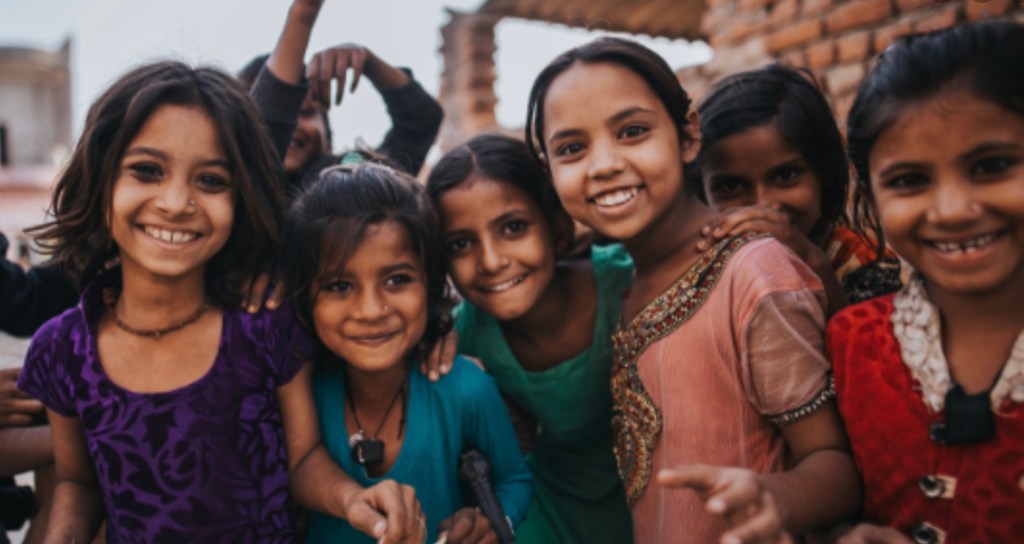
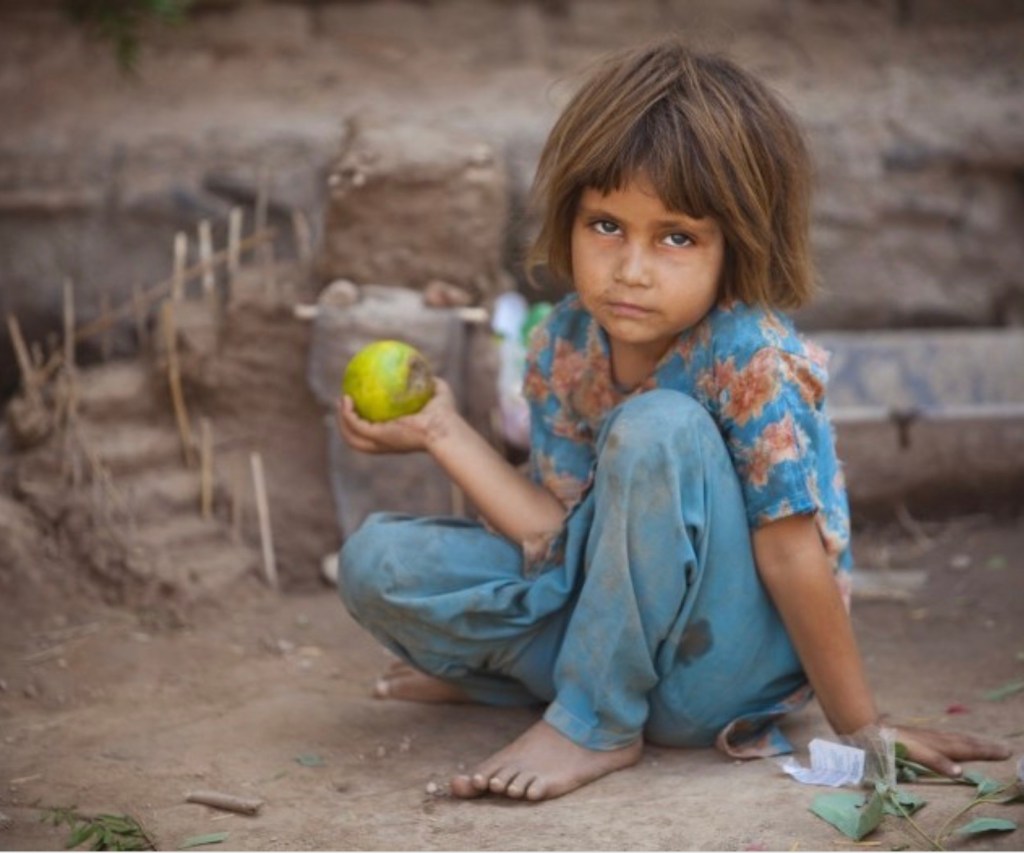
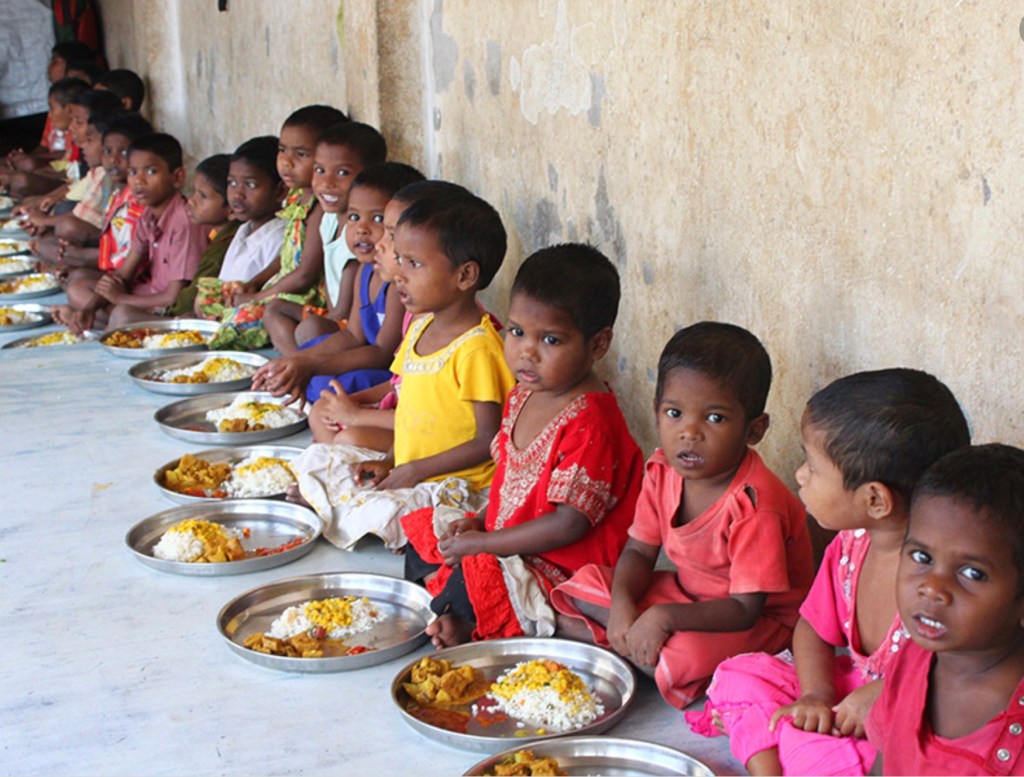
Our Earth, now home to almost 8 billion humans. Also home to 153 million orphan children. Also the nursery to 140 million new births every year. Empirical population statistics when you look at each one individually. But when you connect them via the human equation, one can see the bizarre manifestation of our humanity gone awry.
The need to procreate has been so essential to our culture, beliefs and even our biology, that to build a family unit without passing on our exclusive DNA to our progeny is unthinkable; even unchristian, unislamic. And so, we continue to go from generation to generation, bequeathing with unrelenting tenacity, not so much our values, ethics and a spirit of industry, but the genetic codes that cellularly define us. We proudly bring another nestling into the world, the amalgam of our essential genomic structures, while another child somewhere not far off, adds to the global orphan count. The latter faithfully, effortlessly remains a de-sensitised statistic.
Even organized religion has given in to its baser instincts; and via insidious cloak and dagger plots of familial temptation and intrigue, has summarily discouraged adoption. For how can an adoptive father not be carnally tempted by the fact of the unshared DNA; or an adoptive mother blame herself for her lack of love and care for the child who is in fact, not her child. These are the ugly predispositions that guide our belief systems. And so it has come to pass that some of the most devout nations on earth continue to have the highest birth rates in the world.
I don’t profess to being maternal. The sum total of my maternal instincts extends to my niece and my nephew (they’re as close to being my own children as I’ll have), my team in my corporate past life, the support staff in and around my regular surroundings, and the animal world. (It would appear, there are vestiges of the instinct after all; just not in the customary manner of speaking!) However, I have seen many, many… too many snot-nosed little kids that have become a part of the crazy, conveniently distant tumult on our busy urban streets. And I have heard countless … heartbreakingly countless horror stories of the forgotten children that are manipulated and mauled in the same orphanages and sanctums of faith that avow to protect them. Somehow, somewhere down the line, we have forgotten that we, the human collective, are the nurtures and providers of all the children that we bring into this world.
I am also not a detractor of the traditional family unit. It is, in fact, still one of our conventional social constructs that constantly reminds us that we are innately compassionate, loving and tolerant. However, I am a detractor of every dogma, ideal and manifesto that equates those same human qualities with the sharing of DNA. I am a detractor of all the myths and parables that typecast the concept of adoption in anything but the most judiciously humane light. In our current existences where economic inequality is shamelessly rife, the right of every orphan to be loved and cared for, unassailably surpasses our own need to perpetuate our heredity. The traditional family unit has to evolve into a more conscionable, accepting and diverse whole. The patriarchal ego has to take a back seat as we gradually but steadfastly make the word “Orphan” obsolete.
We no longer have the luxury of compartmentalising the children of our planet into a hierarchy of care, based on genetics. It is high time in fact, that we rallied together like the proverbial village to raise all the children of our world.
“There can be no keener revelation of a society’s soul than the way in which it treats its children.” – Nelson Mandela
*Title inspiration from a 2006 dystopian science fiction movie thriller of the same name.
Maybe it’s the naive rambling of the blissfully ignorant, or the intuitive musings of the arduously life-initiated, or maybe it’s just the endorphins doing an extra merry jig in the face of our pandemic-crippled times – but here goes in the vein of the duly afflicted: I am Mahvash, and i am a true blue urbanite!
Almost daily, I experience some gently euphoric moment in my current tropical metropolis. Gentle because that is the nature of all lovely things experienced in copious repetition; if one’s lucky, the pleasure remains while the mad rapture of the initial days, fades into a fond familiarity. And so it has been with so much of my urban roaming and rambling.
My morning jo – such a simple start-of-the-day ritual and yet so filled with happy anticipation for me. I make an event of it as I tuk tuk it down to my favourite cafe and while sitting ensconced in all that caffeine-warmed intimacy, I absorb the ethereal substance of my environment. I sit with my latte, sipping it hot and gulping it tepid, as i take in the sun-kissed beauty of the Island Downtown. Soaking in the sweet lethargy of a tropical metropolis as it gently undulates into the late morning hours, like a cat languidly treading a much-loved, oft-frequented promenade. Even the busy intersection which the cafe overlooks has the air of the transiently hurried, as the pervasive lagurousness of the place seeps right back into every interval in the automotive street tumult. The verdant green of the Indian Almond and the white-flowered Plumeria trees amplify the constant harkbacks to the tropical abundance of nature even in the heart of the cacophonous city. Two mugs of lacteous latte and my daily dose of spiritual enrichment later, I’m propelled into my daily routine. This early afternoon energy is vitally palpable no matter how late the hour was when I retired to bed the night before – yup, night owlishness is second nature to yours truly!
Most days, I will try and make something of my 11am to 2pm time slot – a much neutralised/ tropicalized throwback to my 9am – 6pm corporate rigour. And in those specially designated hours, i will make my calls, pay my bills online and mostly write. The combined alchemy of my surroundings, the mental vigor bestowed by the caffeine and the relatively recent unleashing of a creative urge long suppressed in the throes of corporate enterprise, has been serendipitously empowering. I write to facilitate not only my flow of self expression, but also to tick-mark the “Productive” box in my day – I realise I’m innately enterprising and even in the midst of time off, i will inject some semblance of stringency to balance work with leisure. I think sometimes, that I might actually have been an industrious worker ant in some not so distantly-elapsed past life. A shining example for my colony, of the love of labour, as I hoisted choice burdens of nourishment 5000 times my weight in the dappled canopy of some tropical fruit tree…. a fruit tree home-base because I would like to believe the spirit of industry came with some smarts too!
Some days, I will give myself a break such as that is when you’re on a never-ending sabbatical, and roam the city. My roaming days tend to be cloudy and therefore more conducive to long, rambling walks across the city’s tree lined avenues. These sojourns extend over a few hours and I may end up circuitously walking 9 or 10 kms. Usually I will detour through shady back lanes laced with copiously flowering trees and creepers nodding their bright-hued heads in the breeze; or strewn almost in staged perfection with all pink or all white or all yellow petals; or adorned with pretty little balconies nurturing their own abundance of foliage, dropping their resplendence across their railings in exuberant, meandering bunches of cats claw yellows and purples.
Six days a week, I will also go for my run in the picturesque surroundings of the neighbourhood park, tree-lined as it is with the Indian almond, the Mara and the Neem*, all casting long eventide shadows onto the flagstones. On quieter evenings which are brought on mainly by a preceding short but animated tropical storm, the beauty and the tranquility of the place are especially sublime. There are only the few weather-intrepid out and about in the aftermath of such a downpour (of which I am one). The trees glisten, the sky clears to reveal entire twinkling constellations and the whole atmosphere is scented with a rich post-rain petrichor*. In the absence of the regular milieu of running, walking, strolling, cycling and otherwise in all manner contorting humanity, the sounds of dusk also find their place in the quietude of nature with the chirp of the crickets, the end-of-day calls of a tardy lapwing and the flapping of occasional wings as nature’s aviary settles for the night.
The weekend also brings with it the cheerful, spirited calls of Downtime for the industriously employed swathes of urbanites. In my tropical metropolis, this translates to an abundance of celebration in the happy torpor of music and tipple as families, friends, frenemies and foes gather to renew love, acquiantanchip, gossip and rivalry. I’m one of those introverted types who surrounds herself with a bubble of solitude and ventures forth to partake of the party; a psychical phenomenon, I have realized, only the reclusively outgoing can relate to.
The beauty of Tropical Urbania* is its rare ability to hold on to its earthiness while manifesting its contemporariness; its deeply organic feel while delivering on its urbanity; and its infinite capacity to feel like nature’s embrace in the midst of all the metropolitan milieu.
This is the city that I love.
De Khudai pe aman
*Neem tree: Indian lilac or mahogany
*Urbania: related to, or of the city
*Petrichor: the smell of the earth immediately after it rains





 Mahvash Mohtadullah