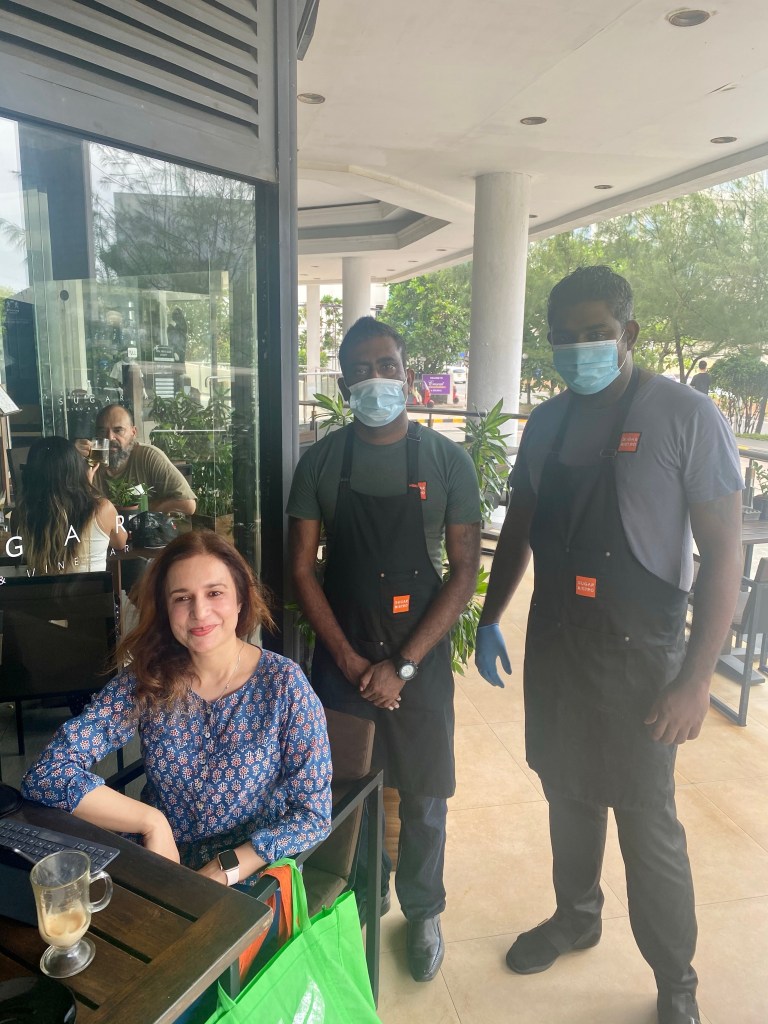
FOOD SWINGS|The Capital Bar and Grill

RESTAURANT: CAPITAL BAR AND GRILL AT THE SHANGRI-LA HOTEL
ADDRESS: ONE GALLE FACE MALL, COLOMBO 3
CUISINE: MODERN, INTERNATIONAL, CONTINENTAL
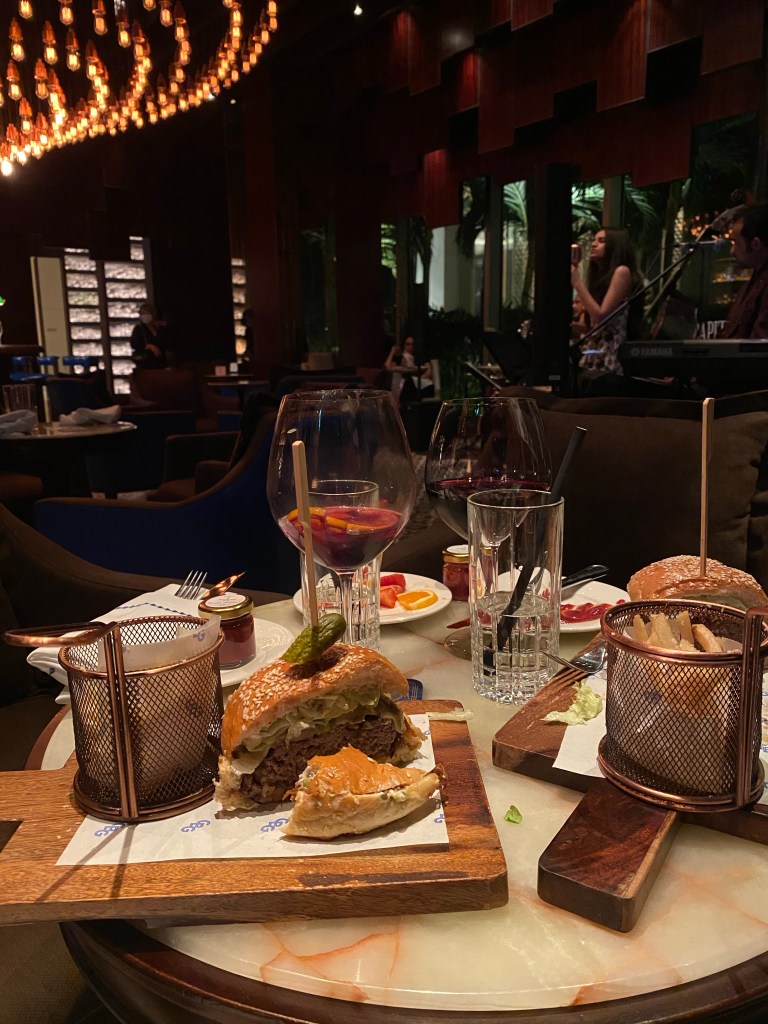
Ensconced in the modern, luxurious environs of the Shangrila Hotel, this venue is almost a nostalgic throwback to the bars of the 40s and 50s, with a lovely modern twist.  From the repertoire of live music to the atmosphere, it is warm, retro and relaxing.
I’ve been a number of times to the bar and admit, i have had a varied gamut of experiences.

OPPORTUNITIES FOR IMPROVEMENT:
-The Parking area is dismally inadequate over the weekend as wedding parties, mall goers and hotel patrons all vie for a spot.
-Patrons are not allowed to make reservations at the bar. So if one happens to walk in later than 8.30pm, there may not be a seat/ table available. If there are a significant number of no-shows, put in a process whereby reserving patrons are called 20 mins before their scheduled arrival time to re-confirm their reservation. If they don’t arrive despite the re-confirmation, give the table to someone else.

THE GOOD STUFF!
-The atmosphere definitely. It is luxurious yet comfortable - one can sit back and bask in the lap of old world charm at quite its best in Colombo.
-The food is quite good for the most part.
-The service is good (I do go on about service because it really makes up half the food and hospitality experience. Having been in the Financial Institutions Customer Experience realm for almost a decade, it is almost instinctive now to gauge every aspect of service delivered, from the front-desk manner of the usher to the culinary/ spirits knowledge of the serving staff).
-The live music sessions have always been fabulous. The last time it was a lovely myriad of jazz, folk and country delivered beautifully.

FOOD SWINGS| “RARE” At Uga Residence

RESTAURANT: “RARE” AT UGA RESIDENCE
ADDRESS: PARK STREET, COLOMBO 7
CUISINE: MODERN, INTERNATIONAL, WITH A QUINTESSENTIAL SRI LANKAN TWIST
This was my first time for dinner at the Uga.  

OPPORTUNITY FOR IMPROVEMENT:
There was really only one aspect that got to me. Only because it is so simple to get right... or wrong:

-The bread basket was sadly full of old, crusty pieces of bread which set a somewhat dire tone for the rest of the meal. The staff was quick to respond and they did bring out a fresh bread basket. That was a faux pas that is so easily/ cost effectively avoided.

THE GOOD STUFF!
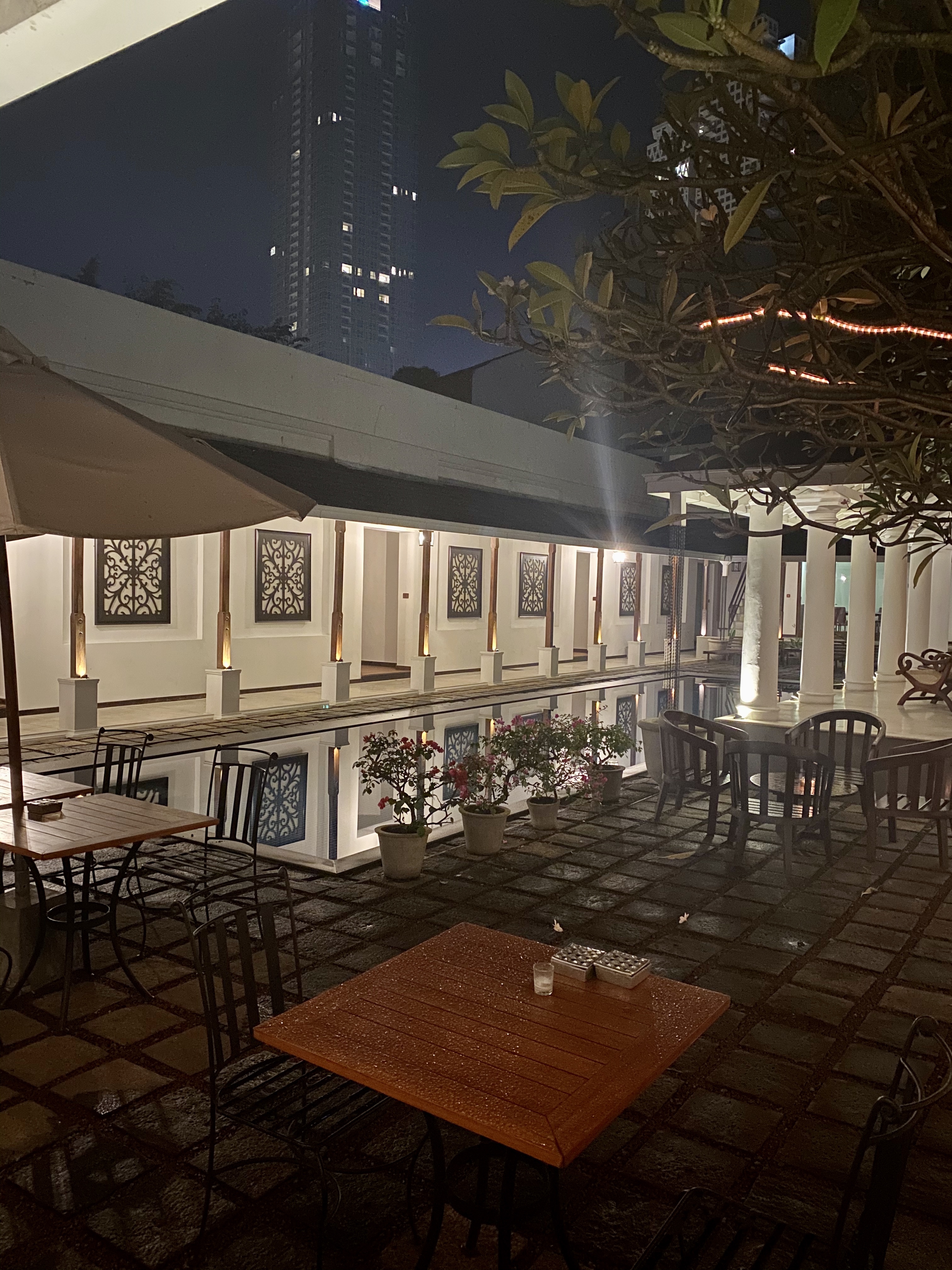
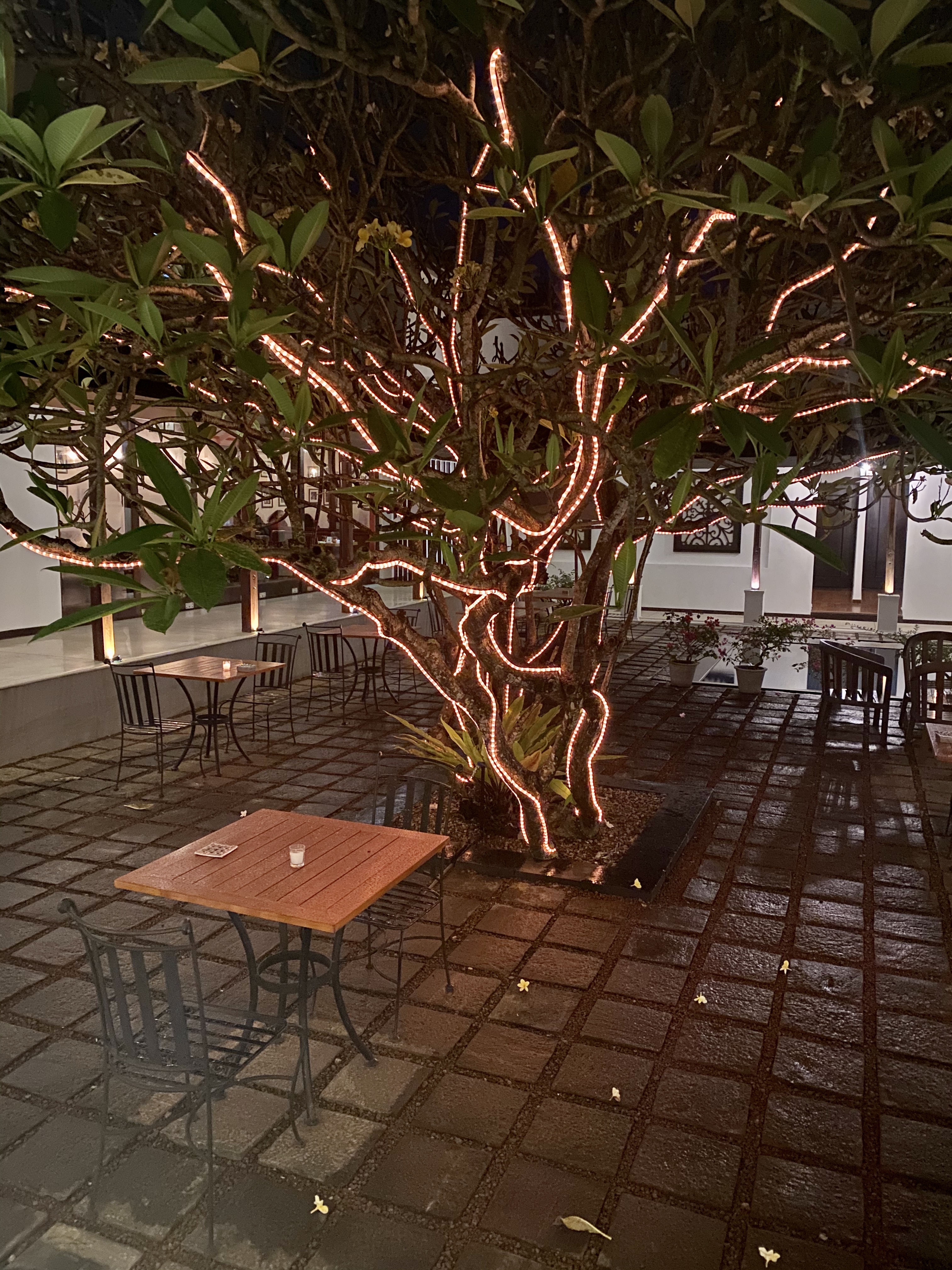
-The atmosphere was absolutely scintillating. It was just post a monsoon shower and everything was clean and gleaming. The restaurant overlooks a courtyard that is especially beautiful. We requested them to put a table outside for us so we ate al fresco. It was quite surreal.

-The appetisers were quite fabulous, especially the baked cauliflower. The Waldorf salad was not bad second.

-The main courses were quite good. I had the chicken in lemon grass and my partner had the pork belly.

-The service was quite impeccable given that the restaurant was full and the establishment was short-staffed that evening.

-They had a good/ wide selection of wines available (which is a bit of a rarity even at the better bars around town). And they served it beautifully with a decanter and the works. I’m a bit persnickety about how the wine is stored and how it is served since it makes all the difference in flavour preservation. Good storage ensures the sulphites in the wine don’t ferment and “vinegarize” the wine. Good pouring service, with a decanter or an aerater ensures that the wine breathes as much as possible from a newly opened bottle, for the flavours to really come to the fore.

OPINION | A POST PANDEMIC FEIERABEND*

2020 has induced a knee jerk reaction all its own. The instinct to be glad to have seen the back of it as it goes careening into the past, swept along by our combined tsunami of emotions, is palpable in the various conversations had around it. I have tended to hesitate making my voice one with the rest of the inflamed clamour. I have tended to warp speed away from the present to take a far and away, Space Odyssey-like view of the last 300 odd days, and counting. If you ask me then, it is almost like a universal recalibration of the important things in life, presented to us in cosmic fable form; Aesop and Arthur C. Clarke hitting more than a few psycho-social home runs in the timorous expanse of our current life-space.

I have a couple of friends, lovely people, who, simply put, have been bested by life mentally and emotionally. Who have, over the years of “living a productive life” been inextricably caught up in undefined little crags of disquietude – one could call it manic depression on its bad days. Occasional bouts of frustration and anxiety have, over time, taken permanent space in their psyches. So insidious and sly has this psychosis been, that its backlash of exasperation, rage and the unrelenting need to fit in just so, are now synonymous with the spirit of enterprise, success and community. Caught up as we all are in this crazy limbo between life and the final farewell, the essential catharsis comes in the shape of frequent and voluble sounding off on one another. We rave and we rant about the government’s woeful ineptitude, the kilos that just keep piling on, the hijacking of our religion by the crazed Right and the lack of a glass of wine when you need it most to get just a little comfortably numb. We are, one and all, veritable shrinks; roles we have inadvertently taken on, given the stigma (and cost!) attached to the clinical psychological recourse. But when we’re talking of a chronic mental pandemic, everyone pitches in to do their bit in braving a dear one’s purgative assault on their senses. We absorb until our own cups brimmeth over, and then, we return friendly fire!

The truth is, we have all been existing in some version of a survival mode.

And then the pandemic struck.

As it took root and raged, these friends, through no impetus of their own or the social and professional structures they so meticulously occupied, were suddenly left to themselves. Their ties to the lives they’d lived, severed for a few months. And so, left with no choice, they sat back and healed. The transformation has been stunning. They appear happier, calmer and at peace – at least for now. In all its perverse, blood thirsty ravagement, the Pandemic has somehow also helped to heal in the simplest, most unexpected way – by enforcing long bouts of time-out on us in the (mostly!) safe havens of our abodes, enabling us to once again understand and appreciate what it is like for the mind, heart and soul to realign.

I can make the above keen-eyed observation if you will, with some level of distance from the malady we call a “Successful Life” because 5 years ago, i decided to give a bit of a flying kick to what had become my reality – work, workout, dinner and bed – ad infinitum. I may even have, over time, transcended in some modest way, to a higher plane of mindfulness and centredness: Each new day is a blessing, I value my health, I cherish my peace of mind and the sum total of my acquisitive aspirations now boils down to experiences rather than material appropriations.

This past year of being forced to sit back and smell the Araliya*, has been just about long enough to bring us as a species to that critical crossroad. The question before us is that when we do re-embark on the bandwagon of industry and undertaking, how do we proceed from there? Do we continue to live with each day blending insipidly, blandly and sometimes aggressively, even militantly into the next, underscored always by burgeoning bank balances and power mongering? Or do we embrace the timorous quality of life itself and the need to re-evaluate and make it really worthwhile?

For my part, I have this instinctive gut feel. Gone are the days (or very nearly) when bosses evaluated one’s productivity as being proportional to the number of hours that were spent in the hallowed Halls of Slog, empty and fruitless though many of those hours might have been. The new generation workforce impelled by the way our conventional workplaces and work lives have been altered over the past year, is looking for ever smarter, ever shorter, ever more flexible ways to get the job done. In another decade or so, the look and feel of Human Capital will itself undergo a sea change: it will be about new ideologies, epiphanies and insights rather than the sum total of man hours spent on a project, that will determine success. The workforce will be intrepid, and driven on a whole new level – explorers of the very frontiers of the human equation.

And that universal affliction – that global psychosis brought on by the bullheadedness of the 21st century that our lives are so woefully beset by – that may just finally find its nemesis in a post pandemic Feierabend.

“To create the new, we must first de-create the old, and the reality of de-creation is as strong as the reality of creation”**

Feierabend: A German term meaning the time of leisure and relaxation between the end of the work day and bedtime. It denotes a connection to one’s core, of family, friends, hobbies and ones mindspace. In the context of this feature, it means a whole new ideology of how we gauge progress and success as we more fully embrace our humanity.

*Araliya: The colloquial term for the fragrant Frangipani or Plumeria flower/ tree

**Quote by Helen Vendler, an American literary critic and Porter University’s Professor Emerita at Harvard University. 

Featured

OPINION|MY 72 HURS* AND I

I probably would not have been able to write this piece as intrepidly as I am doing now had I been in the motherland. And therein lies the basis of the conundrum that is our religion: an ideology that is deeply, consumingly rooted in loathsome patriarchy with a formidable intolerance for debate and discussion.

1400 years after the Prophet Muhammad brought the message of peace, tolerance, equality and most importantly, the elevation of the status of women in the fabric of our religious and social structures, we have not only forgotten the essence of that message, but have regressed in ways that would be considered somewhat extreme even in the wild misogyny of ancient Arabia. Islam, in the developing world, led ideologically by our oil-rich Arab brethren, has degenerated into a cacophony of fear mongering, at the heart of which is a gender bias so sick, it is boggling to the mind in the 21st century. So embedded is that illogical, bald-faced chauvinism that its nefarious cultural roots are no longer visible in the milleu of religious (mis)interpretation and ritual. In the masterful manipulation of all organized religions, Wahabi/ orthodox Islam too wields its power by staunching all debate that questions its ethical and moral viability for the current times – for to question is to be a Kafir* and thus branded, you may be exposed to the unwitting but ferocious wrath of the rest of the believers; or if you’re lucky enough to escape that gory end, you are forever a pariah in the fatherland.

I consider myself privileged for growing up in that little bubble of sanity that floats just atop the rest of the malignant mass that is our socio-religious national fabric today. Our generation of females in the family, led by absolutely prodigious women of substance, has been bestowed with those critically strategic opportunities to break through the debilitating and handicapping proverbial glass, nay granite ceiling. We have been raised to believe that the only people who are better than us are those who bring more to the the table as human beings, and that does not include their inadvertent Y chromosome. And yet, during my time working in the corporate sector which is known for its gender inclusivity with its strategic human capital goals of at least 45/55 percent female to male ratios, I was reminded on not infrequent occasions, that to be a man regardless of your professional acumen was to have a clear advantage. One example of this state-sponsored misogyny is the weight/ bearing of a woman’s signature on a legal document. Two female signatures are required for every one male signature for the document to hold up in a court of law. And so on more occasions than I care to remember, the resident tea boy who had nothing to do with the legal gambit or the event (except for the steaming cups of tea in our hands) has put down his testosterone-fortified signature as a legal witness, because I, the woman who was leading the charge on the matter, was not deemed fit enough by our state legislatures to understand it as well as any male can, including our tea boy – who, quite frankly, was a good soul but had limited knowledge of BPRD* circulars and responses to the State bank.

And so this system of overt bias is perpetuated to keep our gender from ever reaching its full potential – an unmitigating stream of psychological and jurisdictive attacks cloaked in fuzzy patriarchy to keep 50% of the country in a constant state of entropy.

Despite these disabling encumberances, our generation has forged ahead – thinking, questioning and expanding our minds and our hearts to become more of the emotionally, mentally and spiritually replete beings that we inherently are. This has also led to a sizeable denominator of women being essentially left in limbo viz-a- viz workable/ aspirational personal philosophies. On the one hand, the religious and cultural ideologies of their forefathers no longer fit their lives in any manner that is respectful, empowering and enriching; on the other hand, any discourse or analysis that could lead to a more gracious and inclusive embodiment of religious tenets is tantamount to sacrilege. This is the state of half the population of the Muslim world; the state of almost a billion people on the planet. I am one of those women.

As we continue to the top of the personal ideological food chain, the number of denizens occupying those upper tiers get very much fewer. The ironic paradox with this food chain is that the apex means surefire disenfranchisement, backlash and predation. Like I said, it is still a rare privilege to be born a female in a truly enlightened Muslim family – I am grateful to be one of those. But our numbers are few and the patriarchal landscape is vast and riddled with a hatred for dissidents that has only become more fanatical through the centuries. However, every revolution of the hearts and the minds begins with a few intrepid idiots calling out the injustice and the oppression. I am also one of those women.

And so I’m diving into my ideological debate with some essential satire on a salient reward of the Hereafter; a lustful vision so unashamedly made synonymous with goodness that it has compelled the righteous to decimate entire populations and on frequent occasions, themselves too: the 72 Hurs or splendid female companions of Paradise. Promised to every believer. I’m a believer and I think I’m a good human being; (I’m also as straight as they come!) So is that vision, touted as it is in every inspirational Khutbah*, an enticing end to a life well lived? I’m going to hazard a guess on behalf of us Muslim women who are almost a billion strong: Nah!

The religious conversation needs to evolve beyond the all male-corridors of our masjids*; beyond erotic visions of the afterlife as the penultimate reward, to a wholesome, dignified ideology of life itself.

It is time, ladies and gentlemen, to take Islam out of the Neanderthal man caves into the light of the 21st century.

*Hur: a “splendid female companion” in the afterlife epitomising the spoils of a righteously led life for every devout Muslim man

*Kafir: unbeliever/ infidel. The term refers to a person who rejects or disbelieves in God as per Islam

*BPRD: Banking Policy and Regulations Department of the State Bank dictating the rules of business engagement for all banks

*Khutbah: A Muslim sermon that is delivered at places of worship mainly on Fridays which are considered holy days in Islam

*Masjid: Islamic places of worship predominantly visited by only men.

CORPORATE SERIES|Demystifying Organizational Success – (Part 3)

Customer Experience Management and Training are probably the organizational success streams that are closest to my heart. Partly because they are usually relegated to the realms of “ticking off the Regulatory checkboxes“ and the “good to have but not the most critical corporate exertions”; but also because i have spent the bulk of my corporate life across 3 separate organisations, methodically trying to disprove the above mindsets. I have met with mostly success as my team and i have doggedly gone after service, process and knowledge breakdowns and shown time and again how, when left unaddressed, they unequivocally cause the enterprise to copiously bleed out customers and revenue.

The service industry is a unique ecosystem mainly because it is the sum total of the experiences and perceptions that its customers take away from it. The fact that it does not deal with delivering any tangible goods or products like a washing machine or an Xbox, means that there is no immediate gratification following a sale, regardless of the intangible/ impalpable awareness of that sale. In the service industry, it is all about the experience as the customer walks away solely with an impression of her hotel reservation or the perception of how easily (or otherwise) her term deposit was fixed. The service industry then, is the merchant of a cumulative array of commerce-driven emotions if you will.

It is no surprise then, that I have always found Customer Experience Management, especially of the financial services variety, a constantly intriguing thing. The service and process culture of any organisation represents its great underbelly; and if there are discontented rumblings therein, the whole corporate beast is innately compromised.

How does Management care for this emotionally and experientially complex creature – the Organization – that is both, its ward and its sponsor?

Via a robust Customer Experience Management and Training manifesto that is tailored to address the unique challenges of that particular organization.

Customer Experience Management: Right from the start, have a robust customer experience measurement and service recovery capability in place. In my experience, some variant of the below four-fold approach, depending on Organizational culture, size and life cycle, has proven to be the most comprehensive, simple and effective:

1- A Service health barometer: This translates to an all-encompassing and continuous gauge on the pulse of your customers. Emotions and therefore experience satisfaction are as fickle as the best laid plans. What is good for today may not be optimal in 3 months time. VoC* adroitness enables the organization to stay on top of what is relevant to our customers both in terms of current pain points, USPs* and future product and process goals. This VoC is mostly externally driven via customer-initiated feedback and complaints and (for bigger organisations) also internally driven, via company-solicited product and service feedback channels.

2- A Service measurement index: Once the feedback is received from across the external and internal channels, highlight the top 5 – 10 areas of customer concern, delight and aspirations to be managed as below:

    • Build service measurement metrics for the areas requiring improvement to identify process, people and knowledge bottlenecks. Institute a regimen to gauge the ongoing health of these areas post a remedying intervention.
    • Actively share the USPs with the product and service teams. Build metrics around the unique selling propositions and measure performance albeit on a less frequent basis to ensure they remain healthy and delivering.
    • Ensure that the customer-identified product and service objectives/ aspirations are made a part of product steering committee meetings to discuss their viability and efficacy vis a vis overall satisfaction and returns.

This measurement and action cycle is not a one-time exercise but a continuous loop to ensure the organization always stays abreast of its issues while proactively safeguarding and growing its customer and revenue base.

3- Process and product Optimization: This is a critical next step to the bottlenecks emanating from the VoC and the Service measurement metrics. Without it, the CE cycle is like a toothless tiger – all roar and no bite. This is by its singularly curative nature, the most laboriously and strategically challenging function. The battles on the improvement landscape can appear many and daunting. Let the VoC be your primary guide assisted by overarching management insight into identifying the improvements which would elicit the maximum bang for the buck in terms of impact on the bottom line.

The last point deserves a special mention all its own because of its substantial effect on the overall wellbeing of the organization. And that is Training or Learning.

4- Training: The issues emanating from the VoC and the service indicator assessments are of 2 main varieties: process/ pricing related (the hard bats) and knowledge/ behaviour related (the soft bats). Usually, the hard bats are the first to be addressed because they bring to the table, the necessary professional complexity if you will, to seem like the exclusive conduits to creating satisfied customers. A lot of times the real low hanging fruits are left to the more astute competition to harvest and feast on. Those fruits are the basic knowledge and behaviour gaps that end up not only creating customer dissatisfaction, but also circuitously lead to an increase in complaint volumes and service delivery re-work, as easily avoided misdemeanours pile up for remediation at best, or walk out the door with, often times, our silently detracting customers.

Some Shrewd Wisdom: if organisations spent half as many resources on addressing the knowledge gaps that are identified via their VoC streams as they do on full blown, overarching learning initiatives, they can cut their complaints by a third and increase satisfaction by over 30%.

These knowledge and behaviour gaps can be bifurcated into 2 main types:

  • The training needs that are more extensive and require a classroom setting to be delivered and learned.
  • The training needs that are quick and easy to fulfil and basically comprise of minor tweaks in the way the frontline staff interacts with the customer at the first point of contact of the service delivery. These are the FPOC* Quick Kills that make up about half of the training needs identified via the VoC. These are veritable process refinement gems and are all too often ignored or just genuinely never perceived, ironically, because they are so obvious. We in the corporate world do suffer from what I call the Penchant for the Highbrow, thus missing the Simplicity of the Sublime!

In conclusion, a strategically relevant Customer Experience and Learning program is a 360 degree protocol, starting and ending with the VoC. The fleshing out of the structure in between is what gives the enterprise its fangs and its claws to cut through corporate gristle and get to the heart of things that are central to the well being of the organization. It is no secret then, that a successful CE enterprise requires knowledge, passion, empathy and grit. The professional that i am today has a lot to do with my embodiment of these values as I, without omission, undertook the role of the resident “fixer upper”. It was also a dogged perseverance in finding solutions even in the midst of the most turbulent corporate maelstroms, that led to success.

*VoC: Voice of Customer feedback streams allowing for customer complaints and suggestions to be formally recorded and actioned.

*USP: A Unique Selling Proposition refers to the unique benefit exhibited by a company, service, product or brand that enables it to stand out from competitors.

*FPOC: First Point of Contact or the point when a particular service stream commences.

OPINION|WHAT IF IT HAD BEEN ME?

I am still unsure of how to absorb/ make sense of what happened to over 60 women at the Hammad International airport in Doha last month. I can’t seem to compartmentalise it anywhere in my head. In summary, a baby (a few days old) was found abandoned in one of the bins at the airport. The authorities found her and did the only thing that any despotic nation in an apocalyptic horror potboiler would do: They decided without judge or jury that all the women in all the planes bound out of the airport were guilty, culpable and punishable. So they summarily off-boarded these women, took them to a waiting ambulance somewhere in the airport, had them lie down and then proceeded to strip them down to nothing so they could be invasively examined to determine IF any of them was the mother. The ambulance was surrounded by male security guards and the only privacy was afforded by mostly sheer blinds on the ambulance windows. (I won’t go into the moral debate of why the infant was abandoned in the first place – ironically, that very act in itself is one of the many wretched backwash constructs of our “virtuous” male driven social and religious systems and is richly deserving of a whole new rant).

Even more telling of how morally corrupt, power-driven and patriarchal our global collectiveness and the international media machine are, is the almost total silence on the issue from everywhere. The self righteous, voluble right wing media that has an opinion on everything has been as silent as the clock in our universal Halls of Justice. The only reasons that i got to know of the incidence were that one intrepid woman came forward to talk of this physical (she describes it as sexual) abuse on foreign soil while she was en route to Australia, and that I’ve subscribed to Austrialia’s current affairs program “60 Minutes”; and so this video just kind of half heartedly showed up on my YouTube feed.

Since i saw that brave woman’s interview, this one recurring thought has been gnawing at me psychologically and emotionally: what if I had been on one of those fateful flights bound out of Qatar that evening? What if I or one of my sisters or my niece or another one of my female near and dear ones had been subjected to that kind of coercion, humiliation and gross invasion of our bodies?

I’ve written about this incidence hoping for a bit of catharsis in not only thanking my lucky stars that as a woman, i was not in fact there at the time; but also to do my part in making it known that what happened was NOT ok. It was ugly, misogynistic and especially shameful for the stalwarts of a religion and an ideological culture that almost a BILLION women are a part of worldwide.

(See the full 60 Minutes interview via the below link)

https://youtu.be/JgIvt9nm_1M

OPINION|THE STATE OF THE (B)UNION VS. THE REST OF THE WORLD

There has been a tumult of below the radar conjectures and hypotheses about what a post Trump world will be like for us in the global backwaters. I had earlier, in a fit of existential optimism imagined a continuing Trump administration and its increasingly casual/ diluted semblance of global diplomacy (read: Deal vs. War making interventions) for another 4 years, toxic as his local politics have been. And so, painful as the transition to a Biden presidency is unraveling to be, it is apparent that the majority of the State of the Union has trumped national divisiveness and hate with its version of good old American collectiveness. Just about, though.

Good for the Americans! Maybe not so good for the rest of the world!

(Read here my blogpost on why another 4 years of a Trump administration would have been beneficial for a lot of the rest of the world: (https://theroamingdesi.org/2020/08/19/featureenter-the-dragon/).

The way i see it, there are a couple of ways American foreign policy can go over the next few years:

Kind of diluted as the new administration focuses on licking the wounds inflicted by the socio-ideological scrapings and abrasions of the Trump era; or a good old hark back to the days when the American war machinery was going about its well-oiled way on every continent of the world. Because, although it was inadvertent and there was no moral authority at work on this front, Trump does have the honour of being the “zero war” president. He focused instead on his Art of the Deal to deliver for America and quite completely relinquished any assumptions of America being EVERYBODY’S Uncle Sam whether they liked it or not.

The last four years in fact, have been like nothing the Americans or the world has seen in the last 50 years. The Trump administration has whittled, nay thunked away at a democracy and a social collectiveness/ cohesiveness that was damn near perfect, on the surface. Of course, little malignant glimmers of inequity and distrust did come through every now and then when the first world mantle of sophistication became a little worn out. That was then followed by some casual/ oft-rehearsed political tussle between red-neck septugeneraians in Congress that was meant to appease the community that was feeling particularly marginalised or disenfranchised at that point in time – taking political turns to play the Cop and Robin Hood. There was also that much touted freedom of self, and opportunity for all, that was the perrenial bandaid, the ultimate panacea that made America the greatest country on earth. And so it had gone on, the brain washing and the socio-economic glossing over until every last American was convinced that he/she was a part of some elusive greatness even if one third of them had never ever known how it is to actually be First Class Citizens in the country of their birth (70% of the country is white; the rest, not so much). And so the Black and Hispanic communities still have that toxic coming of age conversations with their progeny on how to survive in a basically white supremacist America. The women too, have made little progress beyond the right to vote. It took racist, patriarchal America 250 years of independence before, in a surprising twin-reckoning of race and gender, they elected an ethnically diverse woman to the second highest office in the land. (In a fitting paradox, developing nations like Pakistan, India, Bangladesh, the Philippines, Indonesia and Sri Lanka have had female heads of state decades ago). And the American nation still seems to be reeling from this historic event as illiberal/ dogmatic America fights tooth and nail to hold on to the comfort of its whiteness and its maleness in the aftermath of the most recent election.

Trump embodied all the above and to his credit, showed it up for what it is. He didn’t create anything new – he only exposed the unwholesome underbelly of a nation that was already pernicious at its core. He was copiously helped along in breaking down that painfully erected veneer by the volubly chirpy right wing media machine. And thus it came to pass that the greatest country on earth became the union of divisiveness and hate. That is the 4 year national legacy that the Biden administration has inherited.

The million dollar question keeps popping up like a whack a mole*: will the next 4 years of the American administrative effort be predominantly spent in rebuilding some semblance of its erstwhile national socio-political window dressing, or will it be outwardly focused as before to regroup, repair and recover America’s (un)gentlemanly swagger on the international front?

If the Biden administration takes the former route, that gives the rest of the world that supremely advantageous space to fill in the power vacuum thus created. This has already been evidenced by the signing of the recent RCEP* – the world’s biggest free trade agreement in modern history, connecting approximately 30% of the world’s people and output. With the withdrawal of the US and India, it is also emphatically catalysing an intra East Asian collaboration around China and Japan. This is momentous in that it has the conspicuous absence of the regional giant – India, and the (hitherto!) global super power -the USA, from the helm of a major global undertaking. Another 4 years of lacklustre American interference will surely cement the newly burgeoning bi-polarity of our world.

How effective this route will be to repair, even on the surface, the socio-ideological damage done by 4 years of the Trump administration is very moot, but that is a debate for another blog post if the inspiration overtakes me.

If the US, however, decides to reinvigorate its foreign policy manifesto such as it has been for the last 100 years, then there is the very real chance that the RCEP and other such intrepid Asian exploits into the economic stratosphere, may be manipulated into losing the steam necessary for them to bi-polarize the globe. It will take grit and extraordinary determination to keep these regional alliances alive and kicking and working.

We, the world, will just have to wait and see whether the 100 year jinx is still playing out** and whether that together with all our stars aligning right will do the ultimate alchemical trick of shifting the global balance of power.

The not so distant time will tell.

*Whack a Mole: a popular children’s game where players keep whacking moles that appear at random across a perforated board.

*RCEP: Regional Comprehensive Economic Partnership

**As per Wade Davis (writer and anthropologist) “No empire long endures, even if few anticipate their demise. Every kingdom is born to die. The 15th century belonged to the Portuguese, the 16th to Spain, 17th to the Dutch. France dominated the 18th and Britain the 19th. [By the 20th century], the torch had long passed into the hands of America”.

THE CORPORATE SERIES|Demystifying Organizational Success – (Part 2)

Too often, in the everyday throng of the corporate world, Management tends to lose sight of many of their star players. The race to better the bottom-line translates into a disproportionate recognition of the sales staff, who are bringing in the business. This imbalance is further exacerbated by the notorious bell curve that shapes most corporate performance appraisals: there are a limited number of distinctions that can be allotted and these are summarily assigned to the usual suspects.

While this system is great in the short term, it is unsustainable and damaging in the longer term. In the relentless competition for limited business, where the pie doesn’t grow as proportionately as the hands digging into it, it becomes a self-defeating endevour. That is because the robustness of the new business is not supported by a congruously adequate operational and service structure/ platform. This disparity translates into dissatisfaction, both internal and external, culminating finally into good staff and customers abandoning their loyalty to the organisation and the brand.

What, then, is a workable panacea to this conundrum?

Where the company is in an early growth phase, skewing your rewards structure towards the left to make it more sales driven, is in fact, a good approach. Based on the presumption that the basic operational and service infrastructure is already in place and functionaing, the objective then can predominantly be to mobilize new business.

Up to what point, then, can this skewed rewards structure be gainfully applied?

That strategic pivot needs to be meticulously defined as the acceptable number of complaints per 1000 customers or the Complaints Ratio. This will also define how the company aims to position itself in terms of a niche or mass market service provider or both. If you’re the former, then a complaints ratio between 5% and 7% will work; if you are catering to a more specific, smaller/ discerning subset of customers, then a complaints ratio of less than or equal to 1% should be the standard.

Right from the start, have a robust feedback system in place to not only capture customer driven complaints but also bank initiated VoC* streams. (I will go into more detail on Customer Experience systems in another blog post). To ensure that the business that your sales teams have so laboriously extracted from the market, remains within the realms of your brand, it is essential to define and keep in perspective the goalpost at which to recentre the rewards program of the company towards a more balanced sharing out of bonuses and compensations. This then, will be defined as the Tipping Point at which the company should regroup and review their performance enhancement techniques and payouts.

Talent Management: While the compensation and rewards system may be frontline-skewed depending on which part of its life cycle the organisation is at, there are other steps that can be taken to ensure internal organisational robustness. A key element here is talent management. This is a hybrid financial and non-financial/ psychological reward system that ensures the company retains its best and brightest even while it is predominantly focusing on business acquisition and growth. Enter the HR department and the Management Committee. These 2 entities will need to work in focused tandem to ensure the success of any talent management initiative. The modus operandi is simple:

The top performers in every unit across the organisation need to be identified. This is your talent pool.

An HRRM* needs to be designated to each of these individuals. These RMs will regularly (every quarter at least) engage with their professional wards to find out how they’re doing/ discuss skill set development opportunities/ identify possible new positions/ optimally manage expectations – basically a VoE* and staff development session.

Each one from the talent pool is also assigned a Mentor who is a member of the Management Committee. They also meet regularly where the conversation is about aspirations/ life goals/ sharing of experiences – basically a Character and Ethics building session.

It is incredible how effective and motivating non-financial reward and recognition programs are. Human beings at their core, are an amalgamation of emotion and feeling. These psychological gestures of appreciation are sometimes more effective than even financial rewards and result in a thriving, loyal, market leading work force. Having said that, both financial and non-financial acknowledgment structures that are highly skewed towards just a few functions/ units, lose their temerity and effectiveness with time. ManCom* wisdom plays a big role in finding that right balance, at a given inflection/ change point in the life of the organization of keeping all their people feeling appreciated and happy to be a part of the brand.

Succession Planning: This element of the corporate rule book is not given half as much importance as it should be. I have seen a number of fabulously managed units/ companies fall to the wayside when the manager leaves. The culprit: poor to non existent succession planning and training. There are a couple of reasons for this inadvertent oversight: the first, mostly because it just is not on the company radar, which means there is no trickle down incumbency of this factor into performance appraisals. This also means that it usually doesn’t tend to happen and even if it does happen, it is haphazard and personality driven rather than systematic, continuous and goal oriented. The other reason has to do with our human emotions again – an insecurity about being challenged or even being outshone by the Second-in-command. This i have also witnessed and have seen the natural/ most probable successors to a job role, leave the organisation as they are sidelined and trivialised.

Again, a robust succession planning system needs to be in place to ensure the organisation does not fall into the rut of outsourcing most key positions or losing its essential human capital of promising/ talented one-downs.

(Read Part 1 here: https://theroamingdesi.org/2020/10/29/corporate-seriesthe-de-mystification-of-organizational-success-part-1/ )

(Read Part 3 here: https://theroamingdesi.org/2020/12/01/corporate-seriesdemystifying-organizational-success-part-3/ )

  • *VoC: The Voice of Customer feedback platform consists of a number of feedback streams to allow customer concerns and suggestions to be effectively channeled.
  • *HRRM: Human Resources Relationship Manager
  • *VoE: The Voice of Employee feedback platforms are formal avenues to facilitate constructive staff critique and suggestions.
  • *ManCom: corporate-speak for the Management Committee.

POLITICAL FARCE|AN ODE TO @therealdonaldtrump

**There's a sad sort of clanging from the clock in the hall
And the bells in the steeple too.
And up in the nursery an absurd little bird
Is popping out to say cuckoo cuckoo, cuckoo...
Regretfully they tell us
But firmly they compel us
To say goodbye...
To YOU!
And so my dear Mr. President
I wrote this ode for you, for you.
Your time is up, you tried so hard
I always rooted for you, it’s true!

Despite intuitive knee jerks to the contrary
I kept steadfast in my fidelity to thee.
And now you’ve been sadly booted out
By the insidious US political machinery.

‘Tis true you created gross divisions
In a fundamentally diverse United States
But you were only showing up what was so viscerally embodied
By large swathes of the American electorate

‘Tis true you were the Demonizer-in-Chief
You gave the Corona Ravagement Envy
You were gleefully racist, bigoted, xenophobic
But you were only exemplifying what so many were intrinsically;
Not just quietly closeted anymore with those lofty ideals
But free to strut them, and really relish the feels!

And although there was now all that national drama
There was also the new MAGA*-powered Sovereign Fiefdom
You uplifted the cause of exclusionary statehood
Allowing The rest of the world that rare freedom
To regroup, repair and renew in a space
Not perpetually imprinted with Uncle Sam’s face

You were summoning home all American troops
As you rolled back on the US’ war waging strides
You were making your America great again
And letting the rest of us get on with our lives.
But you were unique in your internationally disinterested approach,
Since America had always been that one invincible roach
That brazenly roams your kitchen by day and by night
Leaving you with the detritus of its pillaging might.

Your political incorrectness was apostatized
To paint you as the resident devil incarnate
Your incongruous presidential demeanor
Was touted to be the fall of the American super state.
And so 45th, you have been summarily dismissed
As a globally failed one term president no less!

But I mourn your hyper-blustery POTUS days,
And Im hazarding a guess that I’m not alone.
The last 100 years of American politics
Have elicited their fair share of planet-wide groans.
Another 4 years of you would have at least shaken
The memory of a bullying, blood-letting American nation.

Now vestigial shadows of America’s wars
Are rearing their ugly heads once again to explore
New conflicts, new conquests, new treasures to be taken;
More intrusion, displacement, refugees, coercion,
Every ounce of dignity and fair play foresaken.
There seems to be naught but more US agitation
Writ portentously large on our collective horizon

And so in ending, to the @realdonaldtrump I say,
We will indeed miss you HUGELY sir;
Your autocratic, Jesus complex,
Your dash of frankincense and myrrh.
Now is also the time for the rest of the planet
To take to their tranquilizing zen spaces;
My crystal ball tells me we’ll soon be battling again,
In America’s brand new edition of The Hunger Games* Races.

De Khudai pe aman

**lyrics from “So long, farewell” from the movie The Sound of Music
*MAGA: Donald Trump’s political slogan - Make America Great Again
*The Hunger Games: A 2012 apocalyptic science fiction trilogy where children battle it out to the death in a bizarre state run electorate-subduing campaign
Featured

THE CORPORATE SERIES|Demystifying Organizational Success – (Part 1)

It has now been over 6 years since i decided to take a sabbatical if you will, from my corporate career. I embarked on it more in the spirit of a healing process (life had thrown a few curveballs at me in 2012/13), rather than a wild abandonment of the work rigour, resulting precariously also, in the sudden and definitive staunching of a hitherto steady income!

Even so here i am, half a decade on, happier and probably somewhat healthier and wiser too! However, you can take a person out of the corporate halls of slog, but you can’t take the corporate exactitude out of the person. And so, i have over the last 5 years, approached all my experiences across the service industry spectrum, from the hospitality to the airline to the internet service providers with my customer experience hat adroitly perched upon my head. I have, quite a while ago, given up even the pretence of being a congenial, everyday customer with a heart full of forgiveness and a kind blurriness of mind reserved especially for appalling episodes of experiential breakdown. I notice everything and while i have made earnest efforts to not treat every service gaffe/ misdemeanour like it was committed by a flawlessly trained prodigy, i do pick my “service battles” from the point of view of identifying those likely eliciting the maximum bang for the buck. So while i won’t voice the mental angst of grossly delayed service followed by fumbling/ bumbling remedial efforts, I will respectfully opine on the myriad different withdrawal regulations that are applied to my NRFC* account – each disparate rule a tribute to its creative forger and executor of the day. The subsequent explanations to central bank auditors could make for a whole new banking science fiction genre; not to mention the plethora of post facto documentary and explanatory toil that I, the customer, would likely have to undertake to help the institution to regularise its stream of inadvertent but almost lovingly repeated foibles.

And so, to cut to the chase, i’ll go right to the helm of affairs – to the leadership of the organisation. That seat of power that can make or break the best and the worst of enterprises.

So what does a good Management Team do to create organisational success?

There are a few simple but utterly alchemical factors here that can convert even a seemingly jinxed piece of corporate enterprise into a decent success. I will explain each in successive blog posts.

Creating and Nurturing a Distinct Organisational Culture: There have been a couple of times, (twice for those inclined to use “couple” to mean a scattering!) where i have become part of a company culture where i felt like i was working for a home enterprise. The work environment being so disparate across the board that it ranged from an all out gestapo reenactment in one unit, to a space bubble with barely a shared ethos among its occupants, in another. And although the 2 units were highly dependent on each other in a particular product value chain, the twain barely ever met in purpose, harmony or delivery. Left unchecked, this work culture dissonance had added over a month to the end to end delivery turnaround time of the particular service. Complaints were rife; staff had been changed multiple times; bonuses were withheld. But despite the best of intentions, the issue stuck like the karmic backlash of a past life. Simply because there was no defined work culture, ethos or a shared Big Picture.

This work culture incongruity is a death knell for companies, especially in the service industry where, unlike in consumer goods producing FMCGs*, the end-user gratification is a sum total of their experience at that point in time with the organisation. Think of opening an account at a bank; your entire takeaway is nothing more than the knowledge that you have a new account in a particular bank underscored by the experience that accompanied that fact. Therefore, leaving the objectives of a mid-sized to large corporation undefined to its daily drivers and facilitators translates into the inevitable gross dilution of end-user experience that in time leaves nothing of the original/ intended USPs* of the company

Enter the dual magic of the Vision and Mission Statements*. These vessels allow management to clearly, concisely and effectively embody not only the existential purpose of the company; but also right to the T, what it means to be a part of the company as staff, customer, supplier and advertiser. (I’m personally not a big fan of shareholder stakes being vocalised in these statements). Building focused understanding, enthusiasm and energy behind these formal statements help to create and perpetuate a distinct company culture. People respond because by nature we are social creatures, and these statements of purpose then become the catalyst for nurturing a community of professionals with a clear unified end goal. A robust company culture though, is not a static thing. While the primary values remain unchanged (e.g. an FI’s* focus on technology, accessibility and financial security), the culture around those values is ever evolving to successfully accommodate the continuous diversity of its people, systems, customers and the external environment. The openness to change needs to be learnt/ imbibed at the get-go; imparted with veracity, in the very earliest of company orientation training programs.

Company management, the ManCom*, is the rightful custodian of the Vision and Mission statements; while every staff is the practical incumbent. In the best organisations, Management role models these values in visible ways to give them meaning, relevance, and to embed them into the DNA of the organisation at large. A game-changing organzational culture is one where its staff members are recognizable almost anywhere in the positivity of their bearing, attitude and pride of affiliation. For me, one such organisation was ABN AMRO bank in the late 90s into the mid 2000s in Pakistan. It was a poster child for hitherto unknown brands taking the market by storm; and continues to be a professional alma mater for so many even after it has ceased to exist in that particular market.

And so, a cohesive organisational culture which brings people together into a work community of purpose, is the first cornerstone of an organisation that successfully leads the charge and is able to cement its position as a leader in the industry.

(Read Part 2 here: https://theroamingdesi.org/2020/11/12/the-corporate-seriesdemystifying-organizational-success-part-2/ )

(Read Part 3 here: https://theroamingdesi.org/2020/12/01/corporate-seriesdemystifying-organizational-success-part-3/ )

*NRFC account: Non Resident Foreign Currency account

*FMCG: Fast Moving Consumer Goods

*USP: Unique Selling Proposition

*Vision and Mission statements: A Mission Statement defines the company’s business, its objectives and its approach to reach those objectives. A Vision Statement describes the desired future position of the company. Elements of Mission and Vision Statements are often combined to provide a statement of the company’s purposes, goals and values.

*FI: Financial Institution

*ManCom: corporate parlance for the Management Committee

Featured

OPINION| A GRACIOUS FAREWELL

I’ve been meaning to put this hitherto confusing, emotionally wounding mass of thoughts to paper for a while now. So far, through all the varied attempts over the last 10 years, I’ve always choked on the words in my mind; cocooned in a kind of benumbing Writer’s Block if you will.

So here i am today, feeling a little more intrepid, a tad more emotionally sound and spurred on by a medley of bittersweet reminiscences, to finally reflect on the vital importance of End of Life acceptance, dignity and preparedness.

To die is inevitable; to lead a life well-lived is a choice. And yet, we leave so much to providence while we can still exercise our power to choose, and put up formidable bulwarks of resistance when faced with the inevitable. This is a construct and a bullheaded perpetuation of our modern times, urged on by medical advances and their preserving effect on our life expectancy. While we are living longer, we have also developed an almost combative relationship with the End of Life. Even when everything is pointing towards the inevitable final exit, we choose to fight. We push back, we suffer, we agonize and we degrade, physically, emotionally, mentally and spiritually as we try and keep the “monster” at bay. A lot of times, that militancy is dispensed by the people closest to the terminally ill; and despite their good intentions, end up reducing their already suffering loved ones to little more than vulgarised shadows of their former selves.

In 2008, my mother was diagnosed with stage 4 colon cancer. She lived with the disease for four years with the dignity, grace and courage of the superwoman that she was. Never once did she put on the mantle of the reduced or the afflicted or the invalid. Right to the end, she remained the gracious matriarch of her warm, welcoming home. Towards the end, the final two days to be exact, when she should have been allowed to make that Final Walk with the same beautiful poise with which she had lived her life, we, her family and her medical specialists intervened with all of our might to fight off the inevitable. She was taken to two different hospitals over the span of the last 3 days where the vitally alive battled to avert or at least delay an end, that became heartbreakingly beleaguered.

My final memory of her last day with us, has nothing in the way of any gentleness, love or the deep peace of final goodbyes. It is a memory fraught with fussing, poking, prodding Medical Staff intubating, pulling and pushing her as they, with determined professionalism, executed their Hippocratic oaths. The memory of her looking right at me, confused and exhausted as they inserted the ET tube down her throat is still searingly painful.

For a full two years after that, I thought of that terrible, terrible last scene every single night before i allowed myself to sleep. Perhaps it was my form of emotional self flagellation for being a well meaning party to the inadvertent indignity and torment my mother suffered towards the end.

And then, I’m not sure whether it was a providential helping hand reaching out from my own subconscious to finally pull me out of my emotional abyss, or the tender, cosmic reverberations of the maternal bond that helped me to transition to my current state of mental well being. That said, it was a dream that gave me back some semblance of my peace. So lucid, potent and reassuring was the vision of my mother being well and happy that i woke up with the sheer visceral force of the feeling – the warmth of her touch still lingering on the skin of my hands. (I have written about the dream in another post: https://theroamingdesi.org/2020/03/09/thank-you-for-the-joy/ )

And so, I finally did surface from the viper pit of guilt and grief and i have since, forgiven myself.

All living creatures are the sum total of their experiences and if there’s one thing I’ve learnt from my experience of losing someone close to me is the ability to see death for what it is – unavoidable. While I have lost my fear of the end, i also now understand the profound blessing a quick (relatively painless) exit is. That a departure that is underscored with acceptance, essential conversations, tranquility and quality time spent together becomes the blessed catalyst for more fully celebrating the lives of the loved ones we’ve lost. That the ability to see life and death with more ethereal eyes, to help us to grieve a little less and remember with joy so much more, are the cornerstones of a loving, respectful parting.

These End of Life conversations need to logically start in the hallowed halls of medical science. Medical caregivers need to bring more depth to their oaths taken for preserving the well being of human life, to include the dignity of death. These conversations need to become mainstream; to change the culture of the crusading and contrariness around death. In our current approach, we are left with too little in the way of the love and grace of final farewells.

It will take a consummate change in our emotional and social makeup and temperaments to begin to ennoble death even half as much as we do life. Given the current state of our world, this gracious labour of love around Final Partings may be the panacea for reminding us of both, the wonderful alchemy of the state of being alive and the eternal fragility of life itself.

De Khudai pe aman

OPINION|THE BIG BANG OF SMALL KINDNESSES

As the pandemic marches on, this is more true than ever. I have felt impelled to write this piece mostly because we have all now, as a planet, lived through a year of the Covid-19 blight. All 7 billion lives have, in some measure, been affected, afflicted or completely upended. And the sobering truth is that there is no real end in sight yet. These past 8 months have also seen families not only devastated by the virus in many parts of the world, but crippled also by the general economic slowdown/ shutdown.

We in the South Asian belt have been relatively more fortunate with regard to our pandemic mortality rates. The conjectures and theories on how the delevloping world is coping so peculiarly well with the disease are varied and many. Call it providential or karmic or the universe finally lining up all the fortuitous constellations in our Asian skies – that is how it is and for that we are grateful. Grateful while still being aware of the economic ravages wrought on the healthy but the vulnerable; the uninfected but the reduced; the vigorous but the poor. Which brings me to the mission of this piece – the importance of being kind. Of engaging in little everyday gestures of generosity to alleviate in some part the struggles of the less fortunate members of our communities.

Start with your neighbourhoods.

Give just a little bit extra to the tuk tuk driver who’s been whisking you about town (or running errands for you) through blazing hot days and even the errant tropical storm. Even if you don’t get into his carriage much or at all these days, tip him for all his gracious service and for persevering still, to earn a decent living despite bleak business.

Patronise your local fruit and vegetable sellers and your standalone neighbourhood grocery stores rather than the larger franchised establishments. The balance sheets of the latter will survive a year or so of beleagured business; the former, however, will be forced to shut down their doors permanently, changing the fortunes of entire nuclear and extended families forever.

⁃ Even if you’re of the genteel old school of thought, for whom the hawkers of malodorous incenses, oddball children’s story books and car cleaning paraphernalia are persona non grata in the general milieu of roadside traffic, be kind. At the traffic lights, despite yourself, roll down and buy some incense, buy a book or buy a cleaning product. Be gracious with your privilege.

⁃ With restaurants and bars in operational flux, if you do go out, tip generously. For most of the kitchen and serving staff, your service gratuity makes all the difference between being able to send a child to school or not.

⁃ For those that are now enjoying, in the safety of their homes, the gastronomic pleasures of Italy, Pakistan or the entire junk food spectrum of the Americas, tip the delivery staff openheartedly. For many of them, their endless google mapped excursions around the city are second and third jobs taken on to supplement incomes made ever more meagre by the pandemic.

Be kinder to your domestic staff, those consummate companions one can’t do without in keeping the household engine well-oiled and chugging along immaculately, peaceably. It’s also no secret that a lot of domestic bliss is owed to their inimitable roles in our daily lives!

⁃ And last but not least, our usually bustling towns and cities are also home to a multitude of scavenging animals. These urban-bred packs of stray felines, canines and even a sizeable number of the avian population depend on the scraps and oddments of the teeming human millions going about their usual day. That food source has become unreliable at best. Do your bit by putting out some water for our creature cohabitants, and food if you’re blessed with an outdoors.

These neigbbouhood civics, in my mind, are fundamental and therefore incumbent on all of us. They are the very basic protocols of social decency and community living, but have over time, and as i look around me, lost their place in our intuitive DNA. And hence, as with so many other virtuous but faded/ lapsed communal interactions in our lives, the need to recall, restore and revitalise is important.

And so, this petition is meant as just a little scratching of the surface to that human part that is intrinsic to all of us bad eggs, good eggs, tough eggs, quirky eggs and all.

I’ll leave you with a cheeky little refrain as a gentle reminder of the compassionate beings we really are, and for when we lose that thread now and then in the frenzied rush of life.

I was a hard boiled egg
Less sugar, more spice
It’s taken a pandemic
To remind me to be nice!