
Featured

FEATURE | THE WHISPERING PATHWAY

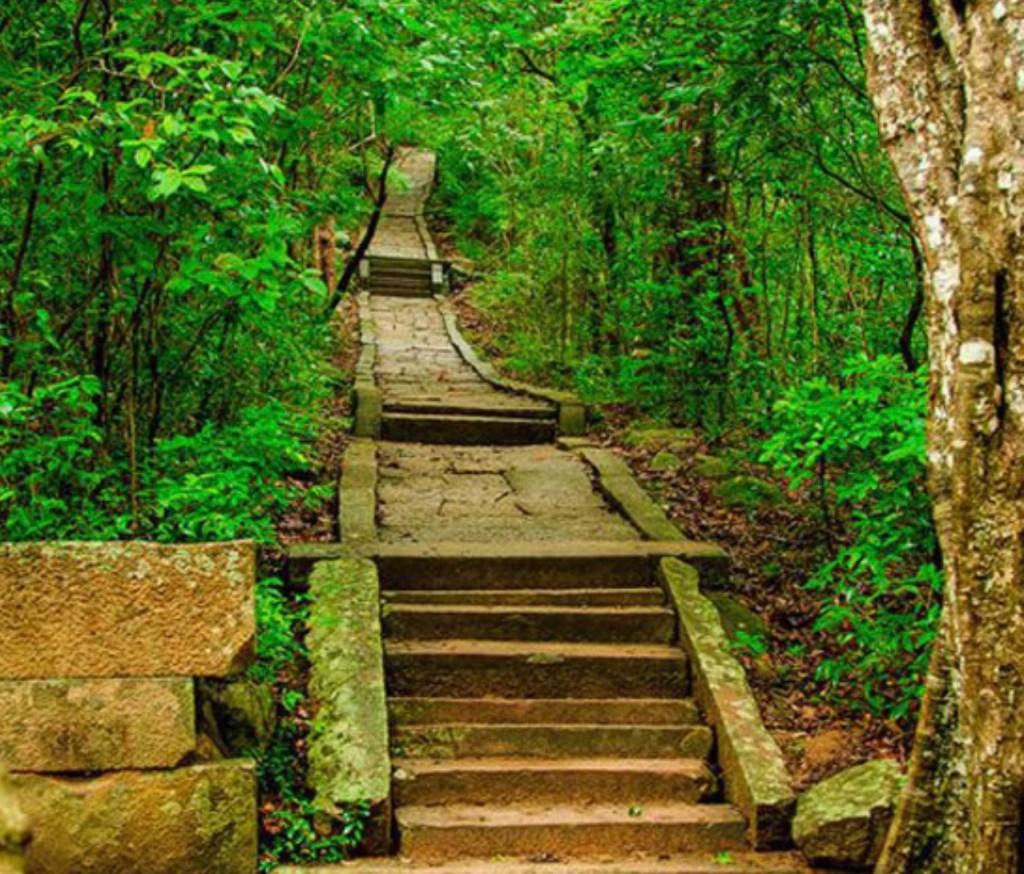
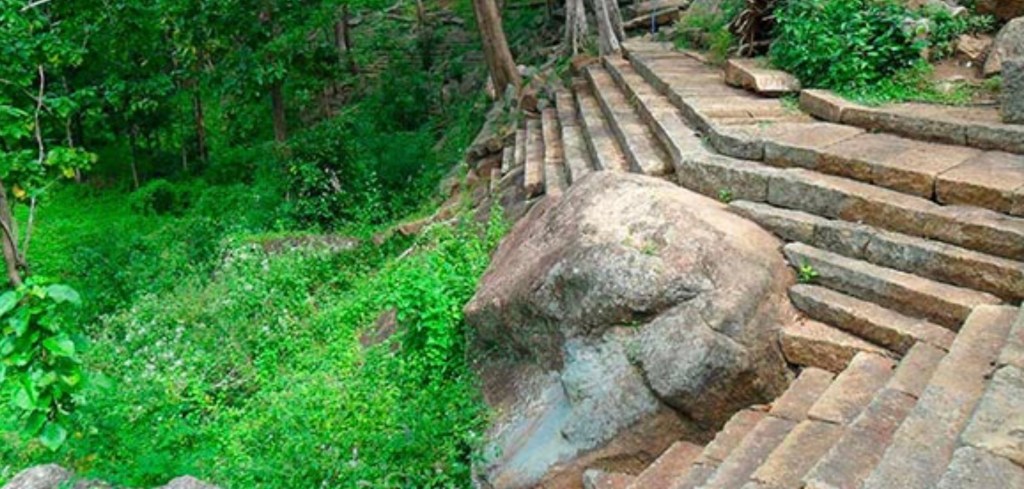
Located in the mountains of Central Sri Lanka, and about 30 kms from the city of Anuradhapura, lies the ancient Ritigala Buddhist monastery. Dating back two millennia, the monastic complex is an epic work of mindful architecture connected via a continuous, forest-hemmed stone walkway.

The 1.2 km hike begins at the office of the on-site branch of Department of Archeology of Sri Lanka close to the foot of the Banda Pokuna, an ancient man-made reservoir with a circumference of almost 400 metres. Erected right down to the base are stone steps that circle the entirety of the reservoir. Here visitors to the monastery possibly completed their ablutions before heading on towards one of the many Padhanaghara – double platform structures made from massive pieces of granite linked together by a stone bridge; these served as meditation spaces. There are over 60 such double platforms over 120 acres at Ritigala. Among these structures are also the vestiges of what was once a “hospital” complete with root grinding stones and Ayurvedic oil baths with sophisticated drainage systems; the foundations of “floating air conditioned” rooms; and ornately decorated urinals to remind one of the fickleness of power and glory.

We began our journey at the Banda Pokuna into this ancient realm held as it was in the benevolent arms of nature herself. As soon as we started walking up the granite pathway, we felt the aura around us shift; take on an ethereal feel. The place manifests a melancholic trance in which one becomes completely cloaked, experiencing each of its elements in vivid sensory detail: The murmuring forest, the life force of its roots underfoot, the iridescent salamanders flicking between the stones and the continuous pathway like a silver beacon to venues of meditation and peace.

Trees, some old as age itself, their serpentine roots traversing the forest floor as far as the eye can see, shade the path with their green verdancy. As we hiked uphill, the atmosphere continued to thrum with their primal energy as one ancient one whispered and its murmur was carried like an undulating wave through the rest of the grove. Then all would be quiet except for the chirr of the crickets and the chorus of a songbird. It felt like we were witnesses to the sharing of a sage old secret; the trees of Ritigala retelling it among themselves and then quieting down as 21st century humans hiked up its ancient trails. Then whispering it again, until one stops to listen; and then the pulse slows down as the heart beats to the gentle rhythm of the humming trees. If ever there was a place where one can SEE one’s feelings, this mystical pathway held in the embrace of the ancients is that place.

Serenity is everywhere. The scene is mesmeric. The trees continue to tell their tales in the sun dappled patterns that shimmer on the path and on our skins; like golden runes that speak of the most profound quietude and peace.

To stand there and to take all this in is like absorbing the quiet energy of all that the monsastery once embodied; the tread of thousands of devotees; their quiet meditation, their rhythmic chants and even the ascendency of their consciousness. One can almost see the ascetics of old and the seekers of calm walk up the steps, their spirit energy conjured up again by the gentle cantillation of the trees. The experience rouses in turn, awe and an overwhelming humility; an acute awareness of the smallness of the individual and the profoundness of the collective.

We came away from Ritigala cloaked in the magic of nature that has continued to keep its erstwhile history vibrating through its quadrangles, pillars and its meandering walkway. The Ritigala monastery is truly a mystical portal through time.
FEATURE|CHILDREN OF THE WEATHER GODS*

This piece is inspired by the dramatic elements of surprise that are innate to tropical weather. An ethereal tribute to Sri Lanka.
Title inspiration from Mark Medoff’s 1979 play titled “Children of a Lesser God”. Screen-adapted in 1986 by the same title.
Indra: Hindu storm god
Yu Shi: Chinese rain god
Zeus: Greek storm god

Calandra: Greek goddess of rain
Olympus: Abode of the gods and site of the throne of Zeus
Having lived in the golden arms of a tropical island in the Indian Ocean for over 5 years now, I have had ample opportunity to experience its whimsical flirtations with the weather gods.  From a spirited lightsaber play with Indra*, to a blitheful dance in the rain with Yu Shi* to a gladiatorial display of stormy rage and thunder with Zeus*, the tear drop island of Sri Lanka has perfected a celestial theatre all its own.  The spectators, all its creature denizens, are left sometimes daunted, sometimes dazzled but mostly awed.

Here’s my attempt at describing a not so unusual day in the equatorial climes of Serendib.

Act 1 - Scene 1:
I wake up to a pale amber light filling the space above the curtain rails in my bedroom. The usually glad-eyed sun is in a somber mood today as I draw back the drapes on an overcast day. I can feel the fickle aura of the atmosphere seep into my bones and I know it’s going to be one of those weather-wise dramatic days. I arm myself with an umbrella as I step out into the late morning torpor. For, while the heavens prepare to unleash their elemental surprises for the day, the moisture laden warmth of the tropics continues to caress all and sundry with sticky-wet fingers.
The clouds continue to gather in thick-bodied eskers along the horizon while the sky above shifts between a myriad shades of grey. The trees sway to the side favoured by the wind, rustling prophetically of things to come. Then suddenly they are still, silent.
A storm is brewing.

Act 1 - Scene 2:
As far away as the rain bearing clouds appeared 20 minutes ago, they have magically, mysteriously traversed the curvature of our atmosphere and are now directly overhead. The grey of the sky becomes opaque like thick wedges of granite. Even though you’ve witnessed this drum roll of a scene a million times, it stops you in your tracks, makes you look up, sends the smallest of cold shivers down your spine. If you’re indoors, you look on from the safety of your enclosed space. If you’re in your car, you hurry home; if you’re walking, you quicken your steps to the nearest shelter.
And then the weather gods begin their ethereal orchestra as big fat drops of rain begin to pelt the earth in an opening prelude.

Act 1 - Scene 3:
Lightning forks through the sky in an ever widening mesh across the city, its jagged ends tearing into the clouds overhead. Jeering, threatening, laughing Thunder strides along with its booming megaphone. The stuporously falling rain has now transformed into sinewy sheets that cut diagonally into the stinging, singing earth. The usually bustling streets are almost empty; when the gods are at play, the mortals look on from safe distances. Maternal Calandra* cloaks the city in a gentle haze, blurring out the most riotous parts of the explosive crescendo.
And the rain continues to come down.

Act 2 - Scene 1:
The glistening leaves on the rain-washed trees rustle in the evening breeze, shaking off their watery burdens drop by drop. The Earth rises from her lotus position, stretching out her arms, a sweet petrichor exuding from every pore. Flying, crawling, creeping creatures poke out wary heads, blinking at their shimmering world. The more intrepid venture out for a last meal before their day is finally done. Fledglings raise a stridently petulant clamour, instinctively aware that the beast has moved on and their world is once more safe and bounteous.
People hurry on with their lives, still guarded, still weather-anxious but impelled by that unceasing urge to get up and go on.
There is a final roll of distant thunder as Zeus laughs one last time.
The clouds clear and a rosy orange sunset appears on the horizon as the rest of the deific thespians head back to Olympus*, their cosmic romping done for the day.

Act 2 - Carpe Momentum:
The late evening breeze is cool and crisp as it darts nimbly into gardens and homes, nipping gently at sun-browned skin. The sky is clearer, brighter as Orion and Taurus blink in nocturnal wakefulness. The smaller creatures are abed, while the bigger ones slow down in the gentle luminescence of a clear, fragrant night.
Tomorrow will be another day with its own atmospheric act and aura, for that is the way of the lusty tropics. And the children of the weather gods will awaken to a new day, fresh beginnings and another chance to get it right.