Tag: Equality
VERSE | I AM PARALYSED
LISTEN TO THE POEM BEING READ AT: https://vm.tiktok.com/ZSd8NkqMC/?k=1
I saw a man at a street vendor’s today
He was engaged in the enterprise of buying fruit
His expression was a breath short of displeased
He wanted a bargain; he planned to depart with his loot.
The air conditioned grocery store was his next stop
Where he paid three times as much for some shrivelled carrots.
I watched these transactions in the street and the store
The poor man got swindled; the rich just made more
I watched capitalism play out its gory game
But I just watched, my mouth was scotch-taped.

I saw a runner deliver food today
To someone in a swanky neighbourhood
The man came out, took his food, turned around
The rider waited a while, staying where he stood
But the man had disappeared into the embrace
Of his upmarket condo, his ultra elegant space
Discretionary income was for parties and clothes
Doling out tips was for mass market folks
I watched these Economics of One play out
But I just watched, my hands were bound.

I have seen these and many more
Unbalanced, unequal, sad acts of trade
The shiny big ones always splashed with largesse
The small, modest ones always selfishly made.
The serendipity of kindness and grace
The simplicity of a helping hand
Are like ships that we have lost at sea
Broken pieces now and then washing up on the sand.
I watch these exploits crush and agonise
But I just watch, I am paralysed.

VERSE | STRANGE-HEARTED
It’s Strange
How some people call all the shots
For you and me; on what’s right and what’s not
On how we should all live our lives
On what we should want to grow and to thrive
And we follow them like so many mice
The Pied Piper surely leaves us no choice

It’s Strange
How some nations are on top of their game
And others continually parry insults and blame
Some swirl around in their blood, sweat and tears
While others race on winds of good cheer
And yet we stand by like so many sheep
The First World Dream will not let us be

It’s Strange
How the spirit of our humanity
Has gone into permanent servitude
For the battle of egos of the few
Losing our grip on what’s right and true
And we circle around like so many moths
Burning our wings in the flames of their wrath

It’s Strange
How hard it has become of late
To step out of the comfort of the bell curve
Created to kill off the being that’s you
Teaching you how you must hate and love
And we fight on like so many soldiers sore
Thinking one more battle will win us the war

It’s Strange
Even as I write these lines
A question skips on the edge of my mind
No, there are two for misery loves company
Who’ll tell me the answers that I seek to find -
When did the glow inside me cease to exist?
When did Instinct and Courage let go of my wrists?


VERSE | PRIDE AND PREJUDICE
“What is your name my dear
Where do you come from?”
(IN HER MIND)
I like the basic look of you
But what place do you call home?

I look at her expectant face
It’s so brimful of hope
I wonder if I should in fact
Play to her embedded tropes

I smile a little smile and then
I look her in the eye
“I’m from _____, my friend”.
I see her excitement wilt and die

She rallies as best she can
She goes to a lot of trouble
But I’ve put a big fat pin into
Her socio-cultural bubble

Her smile, it slowly wanes and then
It falters to a grim
Look of being unsure, like she’s
Invited the enemy in

I look into her eyes and see
Hesitancy, disappointment
I smile a bigger smile now
To appease, to be an ointment

A chance I give to those who seem
Caught in a state of flux
Their hearts and minds, in a grind
That confusion surely sucks!

But She doesn’t warm up to me
Her face is now quite set
The name and the person
Are no longer relevant

(IN HER MIND)
You’ve told me where you come from
That’s enough for me, thank you.
My steadfast biases have
Second-guessed the rest of you.
SHORT STORY|VELVET DREAMS – Part Two
(I)
It was Torturesome Thursday today. The day appointed for the once a week dinner at his father’s house; the house Saqib grew up in and one that he now felt an intense dislike for. But it was an obligatory chore set in stone by his domineering father. Only hospitalisation and out of town visits ever broke this constancy ritual. The old patriarch looked at him with the cold tenacity that had always made him writhe outwardly for all to see, and that he had now been able to turn inwards for his soul to witness only. He looked away as he always did, focusing on something else, willing his racing heart to slow down, to mimic the calmness that he had schooled his exterior to feign. To fake it till his jittery ventricles made it.
His mother sat like a sack of ripe potatoes as she always did, unfeeling, uncaring, uninterested. Growing up, he had blamed her for her stuporous attitude towards the well being of her children. Now, he understood that it was her way of protecting her sanity; the only weapon she had in her meagre armoury of defence against the titanic, intimidating, bullying persona of her husband. He watched her as she smiled at him wanly, crinkling up the corners of her otherwise dead eyes. She would have been a happy woman with someone else. With anyone else he thought.
He looked at Shuja who was sitting beside him and felt the familiar surge of quiet joy. He smiled despite the ritual Thursday evening cross currents. The warmth nestling in that corner of the dining room did not escape the allseeing eyes of Sikander Zaka as he focused his attention on the duo to his right.
“Have you started your Math tuition with Master Edwards?”, he asked his grandson who was digging with gusto into his chicken biryani.
Shuja looked up from his plate directly at his grandfather, “Dadaji, I told you I don’t want to do Math or Ad Math. I want to do graphic art and design. I want to work in textiles’.
He looked towards his father for a moment and added, ‘I want to explore interior design too. I want to beautify homes’.
Sikander Zaka Khan looked for a measured moment at his grandson and then turned the full force of his august stare on his 45 year old son. He expected him to intervene and put a stop to the nonsense his grandson was spewing. He expected him to shake his errant prodigy and drum some sense into his juvenile head. But Saqib did nothing of the sort. He sat there mutely. In his own tortured universe he was willing his son to understand, to know that there was no choice in the matter of his education or the career mapped out for him. At the very least, he was willing with all his might, for his son to not take on his grandfather. It never ended well.
When Saqib did not speak up, Sikander Zaka passed the irrefutable verdict himself.
“You will call the tutor and have him start coming in from next week. He needs to be on top of his game if he’s going to get into Imperial College London. The Zaka men have been going there for four generations. There will be no exception for the fifth. Get his head out of the clouds and start drilling some sense into him about his roots”.
‘Ji Abba’ was all Saqib managed to say. He felt his son’s eyes boring holes into his head. He couldn’t meet that gaze; that accusatory, disappointed, angry gaze directed at him by his beloved Shuja. He wished he had the courage to stand up to his father … to stand up for his son. But he didn’t. And now his own son was old enough to discern his cloying, wretched cowardice too. The boy for whom he had been a champion, a hero, was now seeing him without his cloak … without his clothes! He suddenly had the mad urge to laugh, to guffaw, to throw his hands into the air and shout. My cloak! My clothes! Without my clothes! But he didn’t. Instead he concentrated on the leg piece on his plate, meticulously dismembering it until all there remained was an odd looking creature in front of him. It wasn’t chicken anymore. It was his father’s accusing finger; his index digit that was pointing fixedly at him. He wanted to shatter it, annihilate it. And he did, as he grabbed it and broke it into two.
The sudden adrenaline rush of the defiance, limited as it was to duelling a drumstick, gave him the courage also to finally look towards his son again. Shuja who had so short a while ago been surrounded by a halo of wholesome, beautiful energy was now enveloped by the same dark and leaden patriarchal cloak that draped Roman godlike around the shoulders of his grandfather, and that bound his father like a strait jacket. Few Zaka men had been able to break through this mould of formidable authoritarianism, in both its capacities of executioner and the executed. And so it was that the maned lions of each generation took on the roles of family dictators while the rest contented themselves with the dubious luxury of privileged servitude. Until the great Sikander Zaka Khan was alive, Saqib was quite completely in the latter category and Shuja was being groomed to follow suit. There was only ever one maned lion in a Zaka pride.
(II)
Shuja had a younger sibling, a sister – little Serena. She was seven years old: still too young to sense the disturbing undercurrents of family politics, but old enough to know that she was a beautiful girl. Those ethereal looks were a resounding gift from her mother almost as if in compensation for everything else that was maternal and missing in their equation. The wet nurse who had been by Hina Zaka’s side during both births, had stayed on when Serena was born. To all intents and purposes, she was Serena’s caregiver and her emotional anchor. But this story is about the men in the Zaka family so that’s all there is to say in these lines, of the granddaughter of the house.
It has to be said here however, that the missing maternal link in Shuja and Serena’s case had nothing to do with Saqib as the family patriarch. It was more a tragedy of errors committed as it was by the elders of both families in their age old endeavours of growing their empires. To leave an ever burgeoning legacy of wealth and privilege for the boys who would be born and who would inherit the family crowns. Hina, at the time of her marriage had already been in a five year love affair. Saqib had a mild suspicion that it had since grown and settled into something that he couldn’t quite approach or touch. To all intents and purposes, there was no couplehood in their equation. There was however a sense of quiet harmony that was scrupulously maintained for the fickle eyes of the public and for the unsparing scrutiny of Sikander Zaka.
Saqib had graciously accepted the truth of things and had tried to be both parents to his children. It has to also be said that he had succeeded better with Shuja than he had with Serena.
(III)
The Monday following the Torturesome Thursday at his father’s house, Saqib called Master Edwards. He knew he should have made that phone call the very next day of his father’s austere instructions, but he had dragged his feet. Partly because he had been angry enough to dissent, the quiet mutiny lasting a whole three days, and also because he had seen the hurt in his boy’s eyes. He had seen something cracking and something else putting down gnarled tenacious roots. Was it resignation … rebellion… or… despair? He had not dwelled on the nervous, fearful quickening of his own heart as he swallowed the bile that had instantly risen to his throat.
Master Edwards was completely booked up but he would make the time – for Mr. Sikander’s sake. Everyone who was anyone made time for Sikander Zaka’s sake. The laws of the jungle were the same whether it was the creatures of the forest doing Sher Khan’s* bidding or the city’s rank and file acquiescing to Sikander Khan’s demands.
But the best laid plans – especially if they are executed with disheartenment and dread, do not always beget desired results. Sometimes the universe itself tires of the hypocrisy of men and calls them out with its own jarring, cosmic rattle. And so it came to pass that Master Edwards did come by on the following Tuesday at exactly 9 O’ clock in the evening. He was shown into the study to await the Zaka scion.
Shuja had come back from school that day and had closeted himself in his room. Annual exams were around the corner: those great dividers between those who would rise into the precious ranks of engineers and doctors and those who would not. The ruthless separators of the wheat from the chaff.
There was now an eerie quiet in the room. In the speckled light from the LED lit orb of the world, shadows danced across Shuja’s prone body. Skipping across his face and down his arms to his hands from which dripped gleaming streams of life. Silver and black shimmers that congealed into a dark void on the floor.
There was a scream and a bustle. Shuja’s ashen body was bundled up into the car and raced through the blood-staunching, life-saving portals of the nearest hospital.
A few hours later, the worst was over and Shuja had managed to choose a side. With the optimistic zeal of the young, he had decided to live. Saqib sat by his son’s side, a mixture of emotions ricocheting in the space where his heart used to be. It wasn’t there anymore he was sure. Not literally of course but in the profoundest ways that make one human, that make one a parent. He had during the last three hours even toyed with the idea of losing his beloved child and had felt a bizarre relief at the thought. Relief for Shuja’s ultimate release and for himself as a cowardly, paralysed father who could not support and safeguard his son. He had also felt guilt, searing shame, grief and resignation. But when his son had finally stirred, he had also felt a warm flood of love and a fierce sense of protection. And those emotions had stayed with him long after everything else had evaporated into the ether.
He would give Master Edwards a trite farewell. His services wouldn’t be required anymore. He would himself enroll his son into the Arts stream. They would look for the best colleges that offered the courses Shuja wanted to specialise in. He would help him set up his studio and his graphic design business. He would be his son’s biggest champion. He would take on the world for his precious first born. He would shout it out at Bungalow 77/1, in the old man’s study where the loudest decibels had always ever been just a whisper. He would tell his father that it was enough! That he wasn’t going to sacrifice his son’s happiness in his perverted path of warped legacies and conventions… he would appeal to his father’s better judgment … he would plead for his kindness …
He would beg him to release Shuja from the Zaka shackles.
Saqib looked at his sleeping son for a long time and then looked out of the window at the moon that was looking back at him like a sentinel cyclops. His revolutionary thoughts gradually stumbled, wavered and then fell limply like a wet flag. He knew he couldn’t do anything. The burden of the patriarchy was too formidable for him to challenge or negotiate with. Saqib hunched, once again occupying the modest space that he always had, and looked quietly at his son.
When Shuja was home, when he was well again, when he was happy and once again ensconced in his favourite velvet dream, he would, ever so gently, try to make him see sense.

Read Part One here: https://theroamingdesi.org/2021/10/07/velvet-dreams-part-one/

* Sher Khan: Sher Khan is a fictional Bengal tiger and the main antagonist of Rudyard Kipling's “Jungle Book”
SHORT STORY | VELVET DREAMS – Part One
Saqib Zaka looked at the sheet of paper in his hands. He stared at the short pithy statements that descended down its length, as they looked back at him accusingly, tauntingly. There was some colour on the paper too – an angry red gash against three of the statements. Four-letter gashes in fact, that had blurred before his anxious scrutiny; FAIL they proclaimed loud enough for the whole universe to hear. Saqib shook his head slightly, willing away the buzzing swarm of desperate thoughts that were crowding out all sanity, dignity and even his ability to read. He looked at the transcript again and finally set the truth free: he had failed his pre-engineering exam, for the second time.
Thirty years hence, that memory had stuck to him like rust; constantly eating away at his calmness and purpose. He had tried, in his intrepid moments, to shake the constancy of the memory off, to replace it with the triumphs that had also since found their circuitous way to him. But the recollection and all its accompanying sinking, shrinking, benumbing sensations had prevailed like insidious tenants in the space of his mind.
Saqib sighed and looked around him. The imposing room that had been his father’s office and was now, by default, his, shimmered in the late afternoon light coming in through the window. Despite his best effort not to, his eyes came to rest on the canvas that hung on the wall directly opposite his desk. It was a complex piece of Gestural Abstract art which had hung in the stately room for at least the last twenty years. In its monochromatic palette of random splashes, he always saw a figure, broken down and disjointed reaching for the ground with such desperation that it was almost like he was willing the earth to swallow him whole; annihilate his whole existence. The hugeness of the canvas added to the enormity of hopelessness that spilt from it; flowing into the room like a constant, unending stream of emotional sludge. He hated the piece. And yet, it hung there smug and superior, intimidating and authoritative, alive and kicking. It was one of his father’s favourite pieces of art.
A knock at the door halted his mangled introspection. The rest of the day passed in a flurry of activity that slowly abated around 6 O’ clock. Saqib then picked up his Smythson Panama briefcase and headed for his car. His father would be in tomorrow. Over the last year, more and more, the reigns of the company had been shifted officiously, almost belligerently from father to son. Even so, Sikander Zaka Khan swept into the office once a week, taking everything by storm. It took a day for the dust to settle, while his own reputation as the able scion of the family business was depleted slowly but surely, like the helium escaping from a balloon that had the smallest of perforations in it. With each passing week, even the most stoic of Sikander Zaka and Son employees had seen the boss’s offspring for the chip of the old block that he was definitely not. Ever so gradually, almost imperceptibly, there had been a change in the organisational culture as boardroom debates became more lively, just short of being heated, and the ambient murmur of the executive floor rose a few, not unnoticeable decibels. Saqib had watched all this silently, knowing it was just another counter intuitive ploy by which his father was toughening him up for the role of CEO of one of the largest textile spinning units in Karachi.
While a myriad ungracious, unforgiving thoughts passed through his mind about his unemancipated state, Saqib was also keenly aware of how his Harrods Roquefort bread was buttered: he knew he lacked the rigour and the character for a regular corporate job. He couldn’t see himself slogging 9 to 5 with only thirty days of paid leave. If he was absolutely candid with himself, he knew also, that he didn’t have the requisite skill set either, armed even though he was with his Bachelors degree from the Imperial College London. The couple of Finance courses that he hadn’t quite cleared in the first go, were another echoing reminder of his failure. He knew that to live in the lap of luxury that he was used to, he would have to sacrifice his life choices to a considerable extent and his sense of self, quite entirely. If it had been up to him, he would have become an interior designer … moonlighting as a chef. He loved the aesthetics of furniture and food. He had singlehandedly furnished and decorated his beautiful home. The fact that his wife was quite happy to let him take the lead on all home improvement projects had helped considerably in helping to keep his heart where his home was. His glamorous home on Khayaban-e-Shamsheer was the envy of many a well heeled housewife with whom he readily and fondly shared his vast stores of knowledge, from the best upholsterer in town to the florist who had the freshest imported blooms. His home was indeed, a loving tribute to all his most precious and unrequited dreams.
“Hello Abu”, came the cracked voice from the lounge as Saqib opened the front door to his house. Despite the burden of his innermost thoughts that had today descended upon him like a flood, he smiled. Shuja was growing up and his body was being put to the age old test of the transition from boy to man. His voice had started to break a couple of months ago, a fact that had quickly become a point of many light hearted moments between father and son. He was sprawled on his favourite lounger, his PS4 controller in his hands. Father and son had picked the soft blue fabric for the sofa together and the reupholdstered seat had become Shuja’s favourite chair in the house. His Velvet Dream he had once called it. Saqib had smiled at the aptness of the name for the chair and also for his own secret little stash of them. Shuja was a good child. He was also very creative and talented. And brave. Saqib acknowledged this last characteristic with some trepidation. There was so much potential danger embodied in that attribute that he couldn’t quite bring himself to look upon it as a quality, a gift. With his unusually honed skill as an artist and his love of cooking, he was quite the apple of his father’s eye. And in the sanctity of his home, Saqib allowed his heart to swell with pleasure. He looked at his fourteen year old son, his eldest, with a mixture of pride and joy.

Read Part Two here: https://theroamingdesi.org/2021/10/08/velvet-dreams-part-two/
VERSE| WE, THE WOMEN
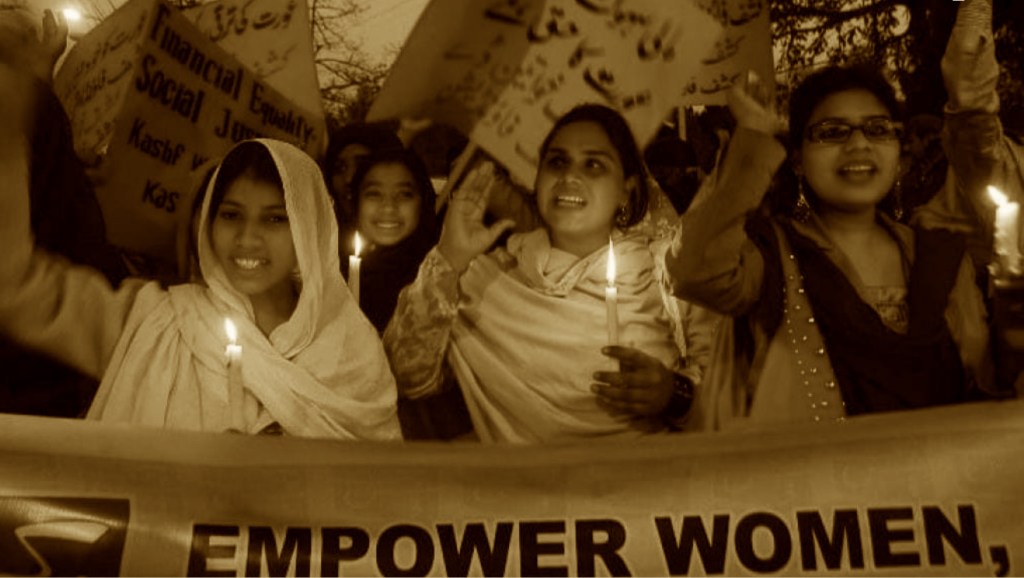
This is a tribute of determination, hope and new beginnings not only for the Pakistani women, but for all the heroic women around the world who are speaking out and standing up for themselves against all manner of cruel and brutal patriarchy. It is also a testimonial and a resounding voice of support for those brave sisters of ours who are living from day to day, facing their detractors with courage and resilience in the hope of a better tomorrow.
I have grown in its shadow; I have felt its hot breath
As it slithers around me; dogging my every step.
I hear it jeer in the brightness of day
On streets and in parks and in quiet cafes.
I see it brazenly growl at my sisters too
As it strides along its pernicious route.
It thunders and lashes and speaks in strange tongues
My head is reeling; there’s no air in my lungs!
From quiet dark murmurs it’s upsurged to discord
The brutal Patriarchy - our master and lord!

I’ve decided I won’t heed its vanquishing rail
I’ve resolved I will fight it tooth and nail.
And so I have become one of the “pariah” few
Who is resoundingly calling for something new.
I make my case; then await the backlash
For sticks and stones; a bruise and a gash.
There are more like myself who are throwing back the knives,
We’re banding together to take back our lives.
One more voice, one more person, one more protest
We’re the Women of _____ ; and we’re up to this test.

From the farthest reaches of our blessed land
We will raise our voices, our spirits, our hands;
Let’s tell them, That’s it! That’s enough! No more!
We won’t be your chattels, your “Islamic honour”.
We won’t hide away so you can roam free
With your hormones and lust; your uncontrollable needs.
We won’t be degraded, threatened and shamed
While you play out your age old tribal games.
We, your wives, your sisters and your daughters
Will be shepherded no more like lambs to the slaughter.

We are the tender, formidable half of our world
We are the guides, the teachers and the nurturers
We birth generations to carry precious legacies
Of peace and love; progress and humanity.
For too long have those reins been usurped by the men
We are taking them back on every continent.
We will be your equals in every way
Step down from those pedestals; come out of your caves.
Hold our hands as your partners as together we walk
We have risen; we are strong; we are the Dome of the Rock*.


* Dome of the Rock: A holy site in Jerusalem which hosts the Al-Aqsa Mosque and the Dome of the Rock, a seventh-century structure believed to be where the Prophet Muhammad ascended to heaven.

Read THE WOMEN OF PAKISTAN - PART ONE here: https://theroamingdesi.org/2021/04/08/we-the-women-of-pk/
VERSE| MY NOISE-CANCELLING HEADPHONES
The below verse is somewhat farcical and maybe even a tad fanciful; but sometimes it takes a bit of a tongue-in-cheek nudge to arouse our fitfully slumbering consciences. May we all continue to persevere towards creating a better, nobler world.
I look at social media and I see anger and hate and prejudice;
I look at the television and I see propagandists, debauched messiahs and wily pundits;
I look at the newspaper and I see political intrigue, national fatigue and ceaseless power mongering -
It goes on, never ending, ignited with the fire from our fossil fuel stores …
I look within me and I see the mirror of my mind reflecting, deflecting, dodging and fending
The piercing, stabbing, blinding light from all this frantic, raving media commotion.

I look around me and I see love and peace and co-existence;
I look around me and I see people coming together to help, protect and build better;
I look around me and I see the universe weaving, constantly interlacing Harmony.
It goes on, forever, propelled by the spirit and soul of our humanity …
I look within me and I can feel my heart echoing, returning, rebounding and celebrating
The warm glow, the shimmer and gleam of the wonderful world around me.

       . . . . . . . . . . . . .

       . . . . . . . . . . . . .


Oh, but it doesn’t end there.  Some endings are just not fairytale-ish.
If I gave in to my easeful delusions, I would be naive and tragically remiss.
Here’s the deal: Human beings are sometimes cruel and that creates a gross impasse
And that’s when we need to use our own eyes and our moral compass
The world around us may glimmer and shine in serene equilibrium
While pockets of humanity elsewhere thrash in blood-letting delirium.
Look for yourself, seize your courage, tell your truth, play your part
This is our ONE world; our one chance. We don’t have the luxury of a Re-start.

OPINION| WORLD ON A WIRE*
Global politics, our collective Moral Compass and the Palestinian tragedy
Funny what our world has become. We grow, we evolve, we hope to become ever better versions of ourselves, and then life gets in the way; our pursuit of success and even our quest for happiness gets in the way. Somewhere down the line, we’ve lost the actual essence of those pursuits; we’ve lost touch with what makes us human – the heart and soul equation we call our Moral Compass. This degradation of our will to distinguish between what feels wrong and what doesn’t, deep in our gut, has gone on for so long that now we don’t even recognise when we are party to cruelty, injustice or irrationality in the name of ideology, faith and correctness.
We, as a species however, are not innately bad. The overwhelming majority of us mean well. We want to do the right thing; we want to stand for the right causes; we want to speak up where it matters. But so insidious and crafty is the state of our global politics and the malicious power mongering that goes on in its toxic folds, that for large swathes of humanity to be duped, brain-washed and even numbed to atrocities is now completely normal.
The one double edged sword where the glint of steel can go either way is digital media. While it is rife with conspiracy theories and extremist ideologies, there is also a healthy spectrum of enterprising, truth telling news and information sources on there. What becomes a necessary obligation on behalf of us, the bulk of humanity using these platforms, is to do the work to separate the grain from the chaff; the truth from the lies; the sincere from the duplicitous. That will depend heavily on first, how true we stay to our own value systems and then, on how we navigate through the tortuous labyrinth of information surrounding us.
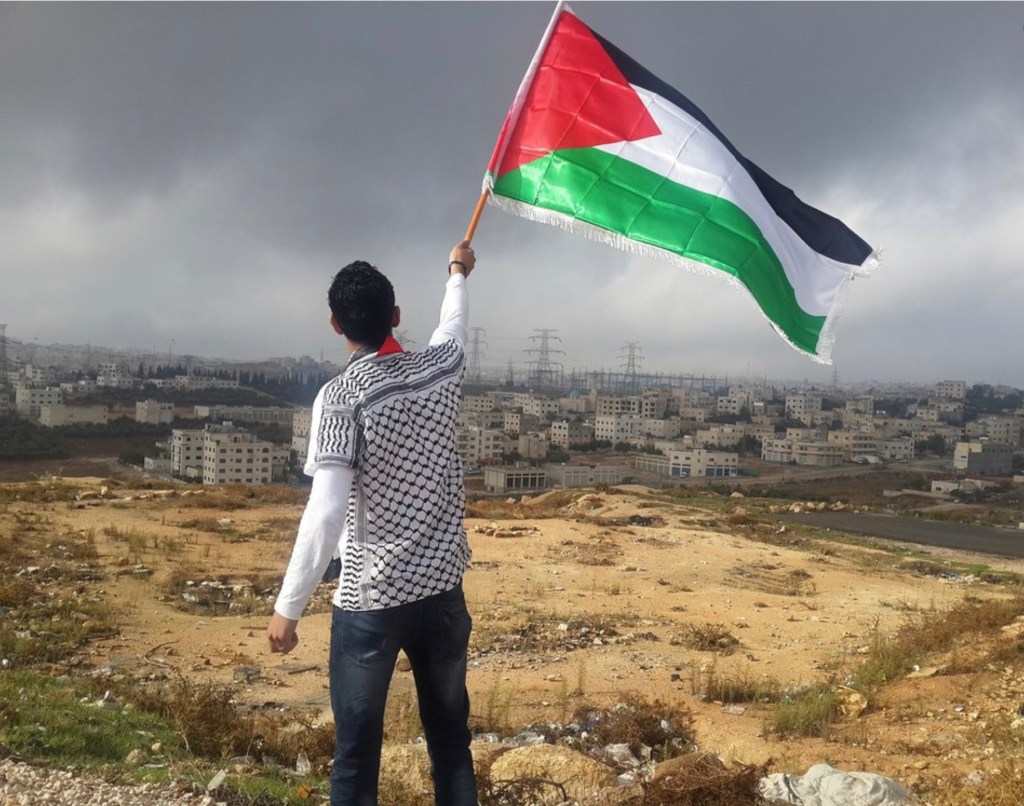
Case in point: the Palestinian tragedy. The bare-faced atrocities have gone on for so long, that we seem to have lost our collective capacity to see them for what they are. And all the while, they have become ever more brazen and cruel. If this was a hypothetical study, it would be an open and shut case long before it had even reached its current levels of criminality. And yet, while we are ideologically devoted to fair play, we appear to have lost our will, our voice and our moral authority to really make it happen. The overwhelming reason: Because the global power brokers, deal makers and profiteers continue to blast their deafening megaphones with cooked up intrigues and imagined threats, confusing, bewildering and paralysing the rest of us.
In the wake of the recent unrest, despite biased journalism and political posturing, it is critical, now more than ever, that the international community comes together as one, to voice its concerns; to make its genuine feelings about the situation heard. This time, our collective moral compass needs to practically swing in the right direction. We need to prove that the vast majority of us still believe in basic decency and justice.
This then is something of a hope and a prayer for the truth seekers and the compass bearers out there. May we continue to find the moral and ideological strength to discern, weigh in and be heard. For the Palestinians and for all the others that are disenfranchised, marginalised and oppressed. Let us take back the global diplomacy narrative from the politicians and their funding platforms. Let us put back some soul and some humanity into the voices that we are raising for a more just and honest world.

– Alexander Solzhenitsyn
* Title inspiration from Fassbinder’s 1973 German Science Fiction television series of the same name.
OPINION| OUR BLOOD-LETTING BLASPHEMY LAWS
We are such a plagued nation, full of dichotomies and hypocrisies. Respectability, patience and civility have forsaken our national psyche a long, long time ago.
And so we blunder and bluster and we barge ahead with nothing to show for our high-handedness but a spiritually depleted image of the crescent moon and star … It is heartbreaking to think this is the best we can be.
The very essence of our religion continues to be hijacked by those that want to keep pulling us into the dark ages. In the midst of all the inane interpretation and bizarre commentaries around the tenets of our religion, we have gone from one abysmal depth to the next. Each “moral incidence” so much more ludicrous than the last, that we have as a nation quite absolutely forgotten real empathy, intelligence and our sense of community. We have forgotten what it means to be a part of a religion that is innately compassionate, tolerant and peaceful. Case in point: our freakish position and regulation around Blasphemy. A colonial construct, it never existed in its current form and fury in the predominantly Muslim ruled subcontinent before the nineteenth century. And then, it was signed into law to ensure that the differences between the 2 major religions were highlighted rather than the similarities which had bound them into a relatively homogenous society before then. That served to keep the two communities divided and separate which suited our occupiers in their machiavellian Game of Thrones.
Since then and more than in any other Muslim country, the Blasphemy Law has become a chip on our collective Pakistani shoulders that we love to invoke when we want to remind ourselves of who’s the boss. What we fail to take into account is that in a country that is 97% Muslim, we are overhwlemingly The Boss. Our religion is not under threat; we are not a minority trying to keep our vulnerable communities safe. We are the ones in control and therefore the ones obligated to show compassion and forebearance. Instead, we have as a society and a State created a monster in the name of religion.
The truth of the matter is that Islam has not laid down any set definition or punishment for Blasphemy. (Remember… Islam started out as a compassionate, progressive and tolerant religion). As such there are as many interpretations of the word and the laws governing it as there are scholars and Muslim countries. And yet, we in Pakistan have ensured that we make the ultimate brutal joke of the concept, punishing only those who are the least capable of defending themselves – the poor and the minorities. Our short history is rife with shamefully copious examples.
There is much to be done on the socio-religious fronts in our besieged country to render our communities more humane and inclusive. There is also ample opportunity to mend our policies where they are the most cruel and unusual; and our Blasphemy Laws are as good a place as any to start.

 Mahvash Mohtadullah